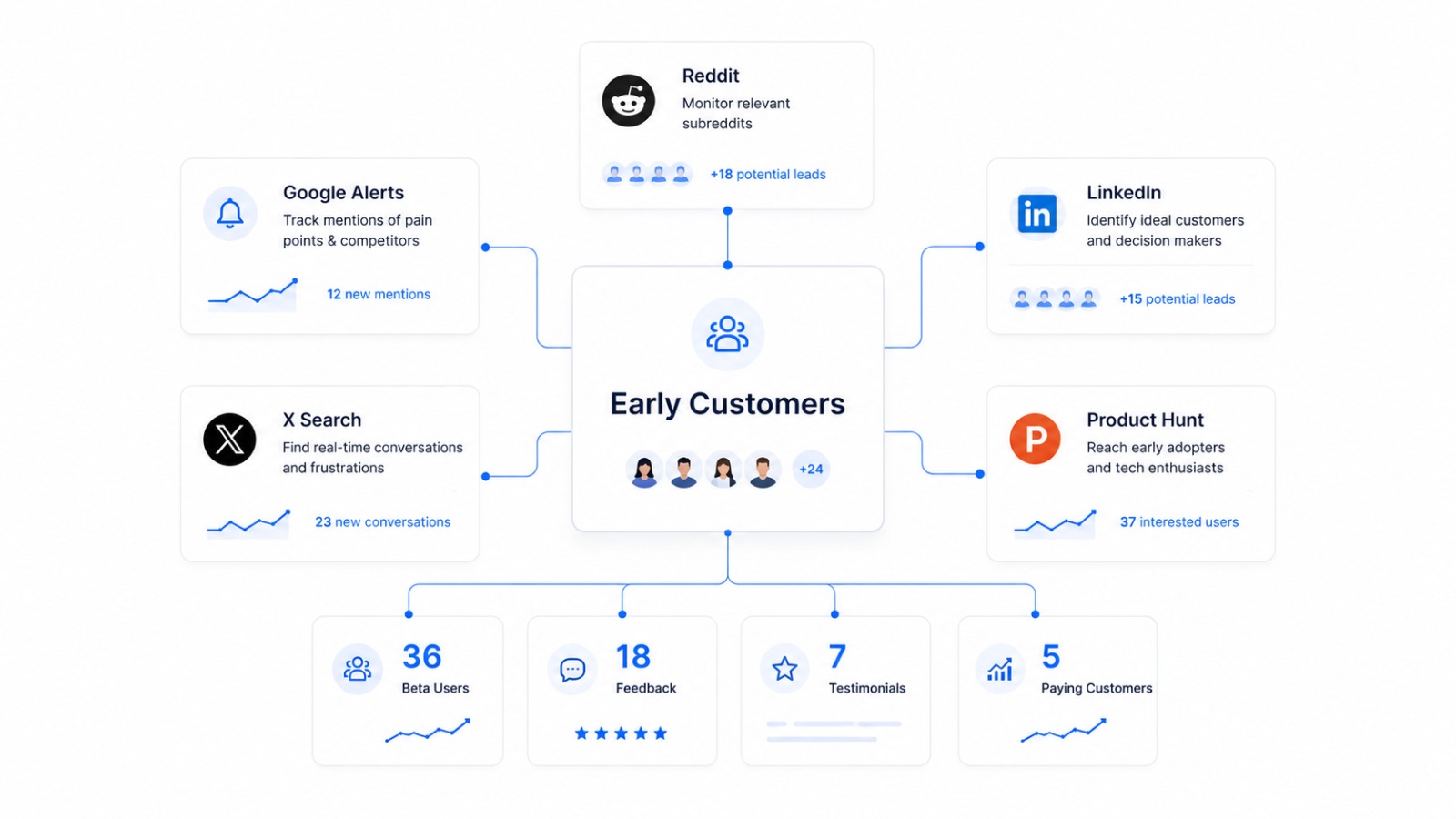
Why first customers are completely different from all the customers that follow
Your first customer is not a data point. They are a business partner who chose to believe in you before you had proof. They are a product research lab who will tell you what your product actually needs to do. And they are the foundation of everything case studies, referrals, testimonials, investor stories that comes after them.
First customers don't come through the same channels as your hundredth customer. They don't come from Google searches, from ads, from viral loops, or from your Product Hunt launch. They come from direct conversations one-on-one, person-to-person, founder-to-potential-customer conversations that happen because you found them, reached out, and had something real to say.
What makes first customers so valuable beyond the revenue
- Product research: they'll tell you what's broken, what's missing, and what they actually use before you waste time building the wrong features.
- Social proof: a single genuine testimonial from a real customer converts cold visitors 47 better than any landing page copy.
- Referral seeds: first customers who succeed with your product are highly likely to refer others in their network especially in tight communities like indie hackers, SaaS founders, or a specific industry vertical.
- ICP calibration: your first 510 customers reveal who your real ICP is often different from who you assumed before launch.
- Pricing signal: they've already told you what your product is worth to them. Use that data to optimize pricing before scaling.
"Your first paying customer is worth 100 what they pay you. The revenue is the least valuable thing they give you."
Where first customers actually hide and why you've been looking in the wrong place
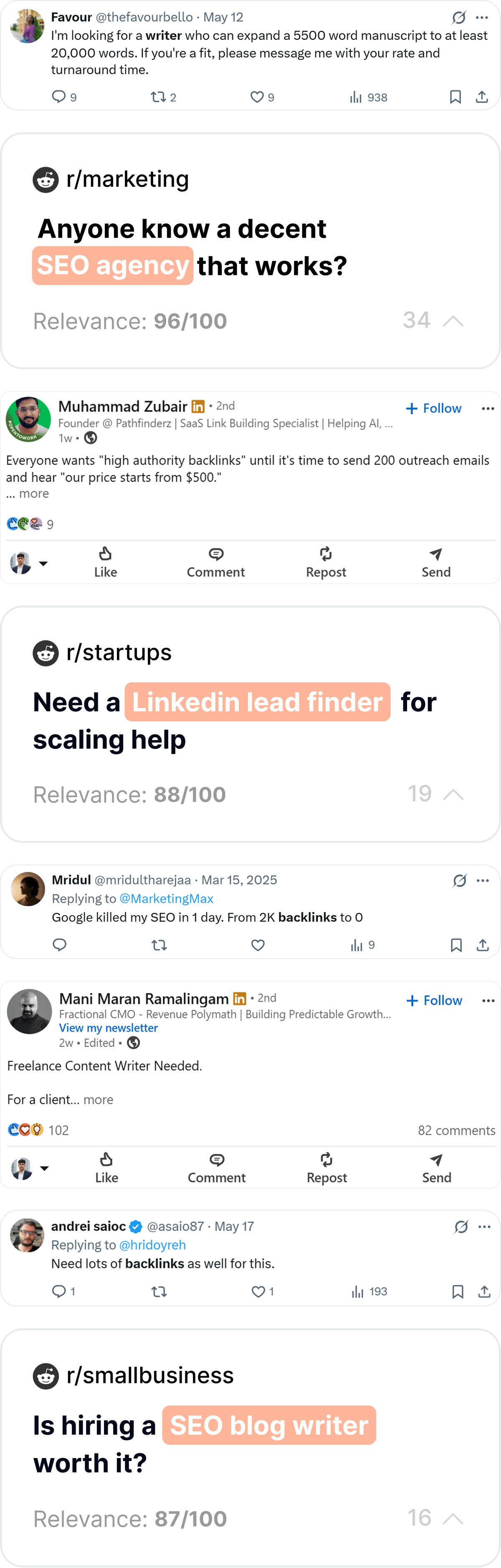
Most founders think their first customers will come from their personal network, their Twitter followers, or a Product Hunt launch. In reality, almost all first paying customers for B2B SaaS products come from one of three places: communities where they discuss the problem, competitor frustration posts, or cold outreach to people who are actively searching for a solution.
The three types of first-customer intent signals
Problem complaints "I hate that I have to do this manually"
Posts where someone describes the pain your product solves, often in the context of a frustrating workflow or a failed tool they've already tried. These are high-intent because the person is clearly at the end of their patience they've tried to solve the problem and haven't found a good solution. They are primed for a solution conversation. Example: "Spent 3 hours this week just trying to find people to cold outreach on Reddit. There has to be a better way."
Solution requests "Does anyone know a tool that"
Explicit asks for a recommendation. The person knows they want a solution and is actively looking. This is the highest-intent signal type someone has decided they want to pay for this, and is just looking for the right product. Your response to this post is your first sales conversation. Example: "Does anyone know a tool that monitors Reddit and LinkedIn for leads? I'm a solo founder trying to find my first customers without spending $500/month."
Competitor frustrations "I'm cancelling [competitor] because"
Someone who is already paying for a competitor's product and expressing dissatisfaction. This is a dream lead: they've proven willingness to pay, they know what they want, and they're actively switching. The barrier to converting them is lower than any cold lead. Example: "About to cancel my GummySearch subscription the interface is too complex for what I actually need. Any simpler alternatives?"
The communities where your first customers live
SaaS Founders Community
Founders sharing launch stories, asking for tool advice, discussing growth problems. High-intent B2B SaaS buyers.
Very high intentEarly Entrepreneurs
Broad community with lots of first-time founders asking for tools, advice, and early customer strategies.
High intentIndie Product Builders
Products, revenue sharing, tool recommendations. Tight community that respects genuine builders.
Very high intentStartup Community
Early-stage founders discussing customer acquisition, product decisions, and growth. High density of your ICP.
Medium-high intentX Build-in-Public
Founders sharing real metrics and asking for tool recommendations publicly. Most transparent intent signals on the internet.
Very high intentLinkedIn Founder Posts
Job title-verified professionals expressing professional pain points. Higher trust, longer window than X.
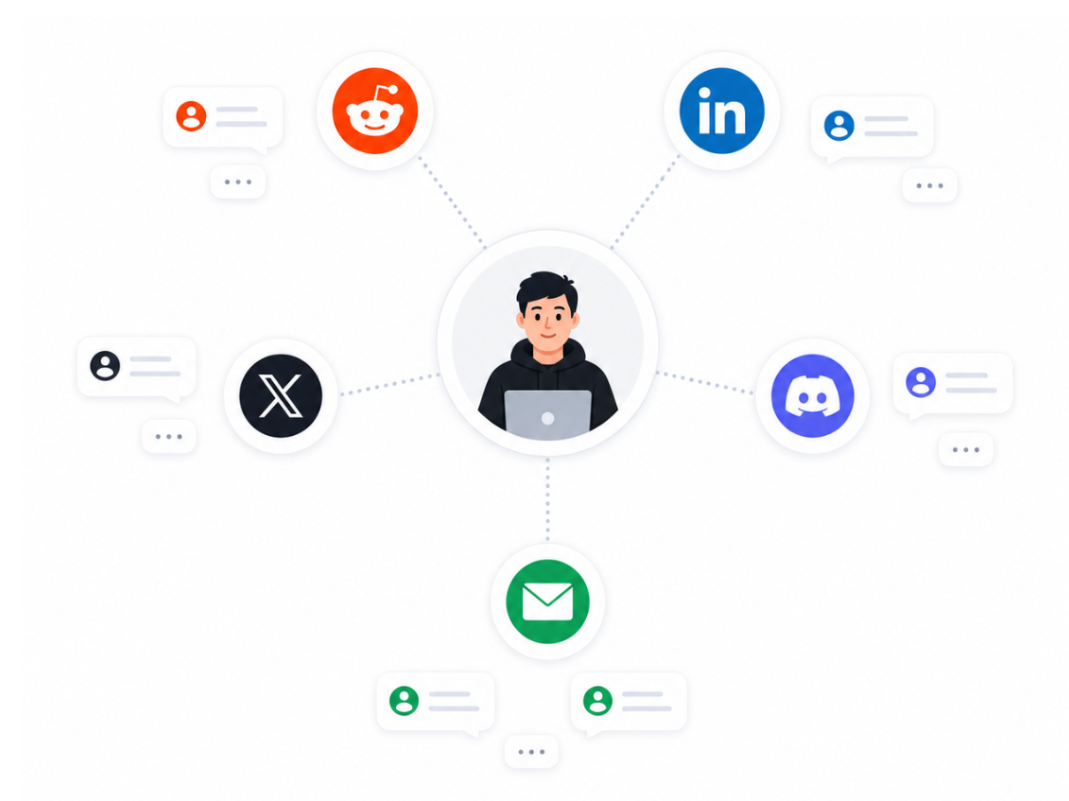
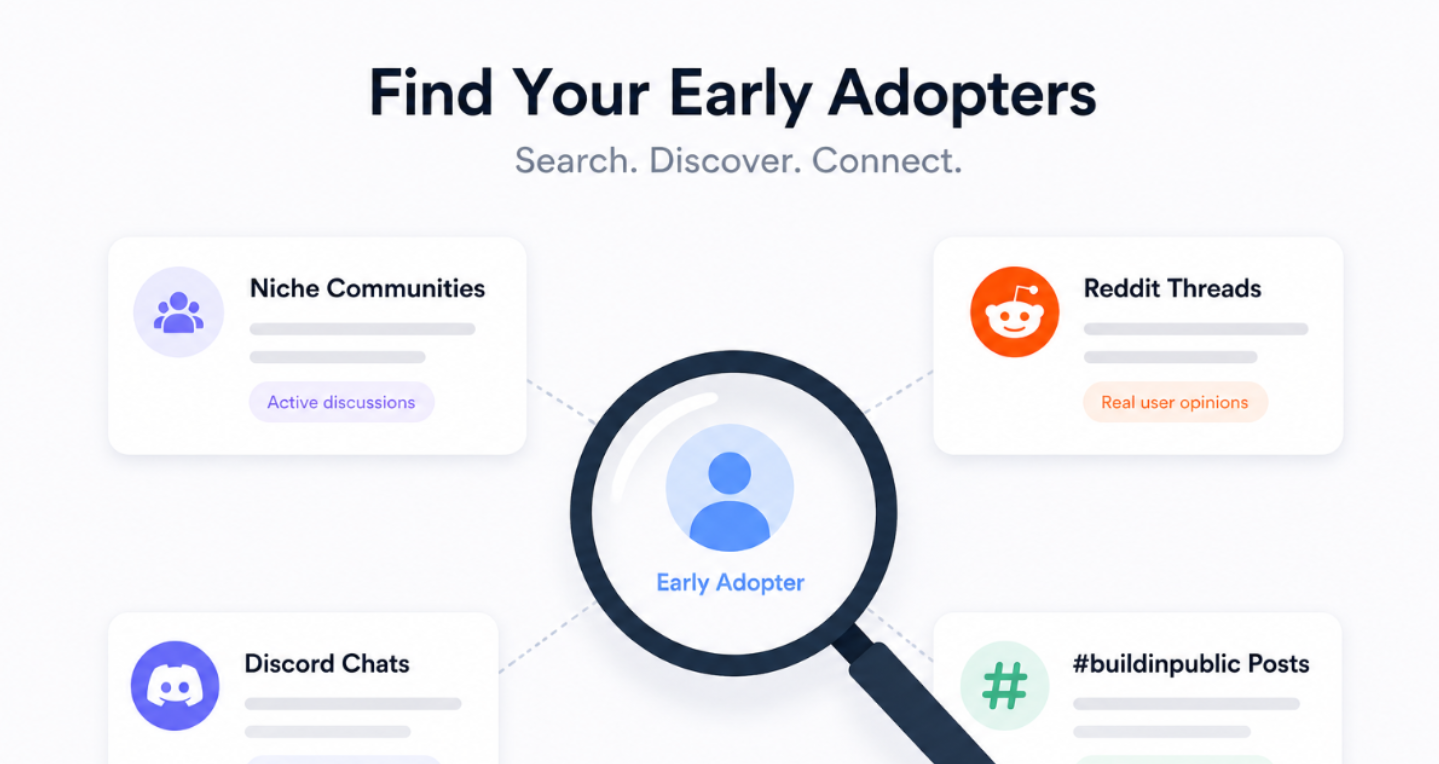
High intentEarlyCustomers.com monitors all of these communities simultaneously plus dozens of niche subreddits specific to your industry and uses AI intent scoring to surface the posts most likely to convert. Instead of manually searching 6 platforms every morning, you get a prioritized feed of your highest-intent potential first customers, ready to engage.
The conversation before the sale: why first customers need to be earned, not sold
The fastest way to lose a first customer before they've even become one is to open with a pitch. First customers are people who don't know you, don't trust you, and have been pitched by dozens of founders before you. The ones who convert do so because you demonstrated genuine understanding of their problem first not because you had the best feature list.
The trust-before-ask framework
Every first customer acquisition follows the same fundamental structure:
Recognize the signal find someone expressing the exact pain you solve
Not a vague description of a relevant problem. The exact pain. Precision targeting from the first interaction sets the tone for everything that follows.
Respond with genuine value solve part of the problem publicly, for free
Your first response is not about your product. It's about their problem. Give them the best manual answer to their situation that you can. The goal: make them think "this person actually understands what I'm dealing with."
Follow up privately with context and relevance
After a genuine helpful public reply, DM with: what you noticed about their situation, what you're building that relates to it, and a low-commitment ask (15-minute call, or just an honest question). The DM should feel like a continuation of a real conversation not a pivot to sales mode.
On the call: ask more than you talk
A customer discovery call that converts has a 70/30 ratio: they talk 70% of the time, you talk 30%. Your job is to ask questions that draw out the full picture of their pain how long they've had it, what they've tried, what the cost is, what the ideal outcome looks like.
Close with commitment, not just interest
At the end of every sales conversation, you need a clear next action: "Can I set you up on a trial today?" or "I can add you as a beta user right now it would be $[X] for the first 3 months." If they're not ready to commit, ask what would need to change for them to move forward.
Finding first customers on Reddit: the platform built for problem conversations
Reddit has an extraordinary density of high-intent posts from people describing specific problems in detail. Unlike LinkedIn or X, Reddit posts are long, specific, and conversational giving you rich context for a genuinely useful response. For first customer acquisition, Reddit is often the single highest-ROI platform.
The keyword strategy for Reddit intent mining
To find first customers on Reddit systematically, you need three types of search queries:
High-intent search patterns
- "struggling with [your problem]"
- "does anyone know a tool for [task]"
- "best alternative to [competitor]"
- "how do you handle [specific workflow]"
- "cancelling [competitor] because"
- "is there a way to automate [task]"
- "been doing this manually but"
Low-intent patterns to skip
- General discussion of your industry
- News or trend discussions
- Self-promotion posts by others
- Highly upvoted old posts (days old)
- Posts in overly broad subreddits
- Posts with 0 comments (less traction)
How to respond on Reddit without getting banned
Lead with the answer, not the pitch
Your comment should be 8090% answer, 10% optional mention of what you're building. If the answer is genuinely good, Redditors will upvote it and people will ask about the tool themselves.
Read the subreddit rules before you post anything
Every subreddit has its own rules on self-promotion and commercial posts. Know the rules before you comment and when in doubt, go the "pure value" route with no product mention at all.
Build karma before you share your own product
A Reddit account with 20 comments and 300 karma pointing to its own product looks like spam. An account with 6 months of genuine helpful contributions and 2,000+ karma can share its own product credibly.
Move conversations to DMs for the actual sale
Reddit comments can get traction but sales don't happen in comment threads. When someone engages positively, invite them to DM: "Happy to explain more in DMs if you don't want to clog the thread."
EarlyCustomers monitors Reddit continuously, scores post intent, suggests relevant subreddits for your ICP, and generates AI-drafted comments that are genuinely helpful and non-promotional, calibrated to each specific post. This is how you respond to 10 Reddit posts per day without spending 3 hours writing comments.
Finding first customers on LinkedIn: verified intent with professional context
LinkedIn gives you something Reddit and X don't: verified professional identity. You know exactly who someone is, what their title is, what company they work for, and what stage they're at. For B2B products targeting specific roles or company stages, LinkedIn intent signals are the most qualified you'll find.
The LinkedIn intent signal types
- Milestone posts triggering new needs: "Just got our first paying customer!" now needs a retention tool. "Running out of leads from my warm network" now needs a lead generation tool. These posts identify exactly the moment when the problem becomes urgent.
- Frustration posts about current tools or processes: "We've been using [competitor] for 3 months and it's not working for us because [specific reason]." Or: "Spending 5 hours per week manually doing [task that your product automates]." Direct purchase intent dressed up as venting.
- Direct tool requests: "Looking for a tool that does X. Budget is $Y/month." The highest-intent post type on LinkedIn. These people have decided to buy they just haven't decided what yet. Being first with a relevant, helpful recommendation is almost always the close.
How to reach out on LinkedIn without being annoying
Hi [Name]  I commented on your post about [specific problem].

I'm building something directly related to what you described, and it seems like you might be dealing with the exact problem I'm trying to solve.

Happy to connect  no pitch, just wanted to stay in touch in case it's relevant later.
Hey [Name]  thanks for connecting.

I noticed in your post you mentioned [specific pain point they described]. That's exactly why I built [product name]  [one sentence on what it does].

We're in early access and I'm only bringing on a handful of people who actually have this specific problem.

Would you be up for a 15-minute call? I'd want to understand your situation better before saying it's a fit  and if it's not, I'd tell you straight. No pitch call.
Calling it a "no pitch call" or "discovery call" dramatically improves acceptance rates because it removes the fear of being sold to. But you have to mean it if you spend the first 10 minutes asking questions and genuinely trying to understand their situation, the pitch (when you get there) feels like a natural conclusion of the conversation, not a sudden pivot.
Finding first customers on X/Twitter: the 2-hour window that changes everything
X is unique among first-customer channels because of the speed of conversation. A post asking for tool recommendations on Reddit can be relevant for days. The same post on X is relevant for maybe two hours. This urgency makes X both the most challenging and the most rewarding platform for real-time first customer acquisition.
X intent patterns for first customers
- #buildinpublic weekly updates: founders sharing their current pain points and tool gaps publicly. "Week 12 still haven't solved [problem]. MRR is $800. Main bottleneck is [exactly your product space]."
- Thread starters about problem areas: someone starting a thread about the challenges of [your problem space] with replies open. Jump in with a genuinely useful take you'll reach the original poster and everyone following the thread.
- Competitor complaints with timing: "[Competitor] just raised their prices again. Looking for alternatives." This has a very short reply window the person is actively searching right now.
- Direct questions to their followers: "What tool do you use for [task]? I've tried X and Y and neither works for me." A public signal that goes out to their followers many of whom are your ICP too.
On X, a buying-signal post is hot for 2 hours after it's published. After that, the person has gotten their replies, the algorithm has moved on, and your engagement will be seen by far fewer people. EarlyCustomers monitors X in real-time and alerts you within minutes of a high-intent post so you can reply in the first 30 minutes, not the fourth hour.
The pre-sell conversation: how to close a customer before your product is done
Pre-selling charging someone for access to a product that doesn't fully exist yet sounds uncomfortable for most first-time founders. In reality, it's the single most powerful validation method, and the customers who pre-pay tend to be the most engaged, most forgiving, and most valuable early adopters.
The three pre-sell offers that work
Lifetime deal at a steep discount
"I'm offering 10 lifetime access spots at $99 (normally it will be $49/month). You'll get permanent access, early feature requests, and a direct line to me. I'm only doing this for the first 10 people to help fund development." This works because the perceived value is high, the commitment is finite (one payment), and the scarcity is real.
Founding member subscription
"I'm bringing on 5 founding members at $29/month (the normal price will be $79/month). You'll be locked in at this price forever as long as you stay subscribed. In return, I'll give you priority support and direct input into the product roadmap."
Paid consultation / done-with-you beta
"While I'm building the full product, I'm offering to solve this problem manually for 3 companies in exchange for a paid engagement ($200$500) and detailed feedback sessions. You get the outcome you need now, I get the real use case to build against."
The closing question that gets a real answer
After your demo or conversation, instead of asking "What do you think?" (which gets a vague answer), ask:
"Based on what we've talked about  if this product worked exactly as I described, is this something you'd be paying for in the next 30 days?"

If yes: "Great. Can I set you up for early access right now? I have a founding member spot at [price]."

If no: "That's really helpful  can you tell me what would need to change about the product or price for that to be yes?"

If maybe: "What's the one thing that would push you from maybe to yes? I want to understand the gap."
Handling the real objections what first customers actually say before they say yes
First-customer objections are different from later-stage sales objections. They're less about price and features and more about risk and trust. Here are the real objections you'll hear and the honest responses that overcome them.
"It's not fully built yet I'll wait until it's more complete"
Response: "Completely fair but here's the thing: the 5 people I bring in now will directly shape what gets built in the next 60 days. If you wait, you're getting the version that 5 other people's needs defined. If you come in now, it gets built around your workflow. That's the whole reason early access exists."
"I'm not sure I need it every month maybe I'll try it for free first"
Response: "Absolutely I have a 7-day full trial. But the people who pay from day one are 3 more likely to actually use it and get results from it. There's something about a tiny financial commitment that makes you actually try. The trial is there if you want it, but I'd encourage you to think about whether that psychology applies to you."
"I could probably build something like this myself"
Response: "You probably could. The question is whether that's the best use of your time right now. What would those 40+ hours of building time cost you in lost revenue? [Product] is $[price]/month. Building it yourself is way more than that in opportunity cost."
"I've tried other tools like this and they didn't work"
Response: "That's one of the most important things you could tell me. Can you tell me specifically what didn't work? I want to know whether [product] has the same limitation before I let you sign up. I'd rather lose a sale than have you churn in 30 days with the same frustration."
"What if you shut down or stop developing it?"
Response: "That's a fair concern. I'm a solo founder building this without external funding. If this doesn't get traction in the next 6 months, I might not continue it. That's why I'm offering the early-access pricing in exchange for the risk you take as an early adopter, you get a much better deal. I'm also committing to notify all early users 60 days in advance of any decisions about the product's future."
"The price is too high for what it currently does"
Response: "That's fair feedback. The price is based on the outcome it delivers, not the feature count right now if it gets you one new paying customer per month, it pays for itself 35. And if you're uncertain: pay for one month. If you don't see clear value in 30 days, I'll refund you completely. The risk is on me, not you."
The 30-day first customer sprint week by week
Getting your first paying customer in 30 days is realistic if you follow this structure. It requires approximately 12 hours of focused work per day, a clear ICP, and the willingness to have genuine conversations with strangers about their problems.
Set up your signals and start monitoring
Set up EarlyCustomers (or manual searches) for your top 58 problem keywords across Reddit, LinkedIn, and X. Build a tracking spreadsheet. Start engaging with 35 posts per day pure value, no pitch. Goal: 1520 genuine helpful comments by end of week 1. Track which platforms and post types are generating the best conversations.
Escalate to DMs
For anyone who responded positively to your week-1 comments, send a DM. Reference the specific post and conversation. Ask for a 15-minute call. Target: 57 calls booked by the end of week 2. If nobody's responding to your DMs, your public comments aren't resonating revisit the value you're providing in public replies before escalating.
Run the discovery calls close aggressively
Run the 57 calls you booked. Ask questions first, demo second, close third. Use the objection-handling framework from this playbook. End each call with a clear next action. Target: 23 people who are willing to pay, even at a steep discount. If 0 calls convert, analyze which objection was most common and iterate your pitch accordingly.
Follow up and close the pipeline
Follow up on everyone who said "maybe" or "I'll think about it" from week 3 calls. Revisit the specific objection they raised and address it directly. Reach out to the 5 best-fit prospects from your week 2 DMs who didn't book a call. Target: 13 paying customers by end of week 4. One paying customer is success. Three is exceptional. Zero means week 5 exists.
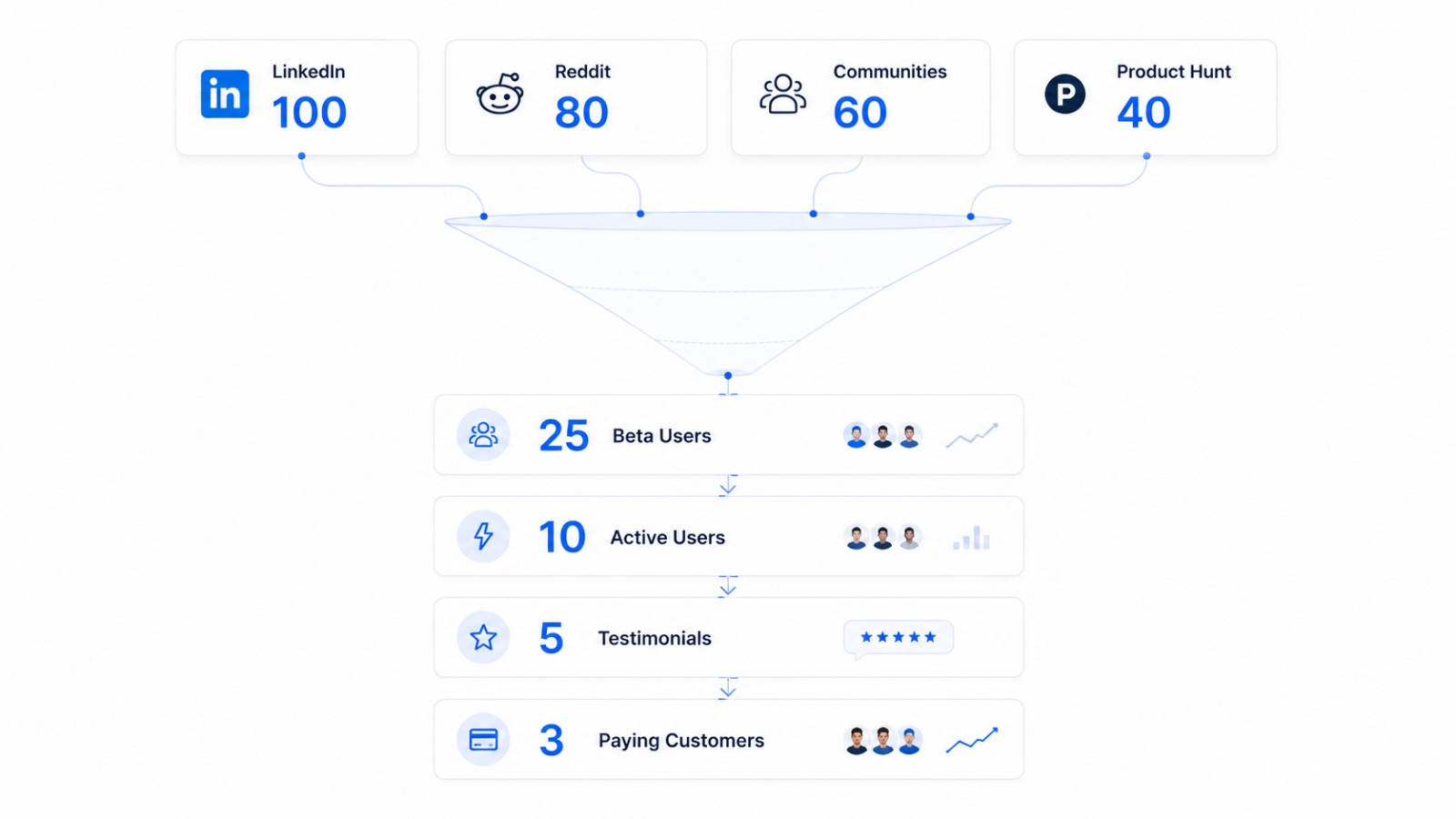
As soon as you have your first paying customer, do three things immediately: (1) send them a personal thank-you message and ask what made them decide to pay this is gold for future sales conversations; (2) ask for a brief testimonial or case study permission; (3) ask who else in their network has the same problem. The first customer is not just revenue it's the launch pad for customers 210.
Your first customer is already out there. Go find them.
EarlyCustomers.com monitors Reddit, LinkedIn, and X in real-time for people expressing the exact problem you solve and alerts you the moment they post. Start your first customer sprint today with real signals, not guesswork.
Find my first customer See pricing