Your first early customers are not found. They're hunted.
Not aggressively. Not with spam. But with the same intentionality a good detective brings to finding a specific person in a large city — methodically, systematically, and with a clear picture of exactly who you're looking for.
This guide gives you that picture.
The Difference Between Early Users and Early Customers
Early users try your product. Early customers pay for it.
Both matter. But early customers matter differently.
When someone pays — even $10 — they're saying: this problem is real, this solution is credible, and I trust you enough to hand over money. That signal is worth more than 1,000 free signups.
Early customers also:
- Stay longer than free users
- Give more detailed feedback (they're invested)
- Refer other paying customers
- Become your first case studies and testimonials
- Help you understand your real pricing power
Getting your first paying early customers is the single clearest indicator that you're on the right path.
Where First Early Customers Actually Come From
1. Your Existing Network (Seriously)
The uncomfortable truth: most founders' first customers are people they already know, or people one degree removed. Before doing any cold outreach, make a list of: former colleagues who work in your target industry, LinkedIn connections who match your ICP, people who've mentioned the problem you solve in conversation. Reach out personally. Not a mass email. A genuine, specific message: "You mentioned last year that [problem] was killing your workflow. I've been building something for exactly that — would you be open to being one of my first customers? I'd love your feedback and I'll make it worth your while."
2. Reddit — Active Pain Threads
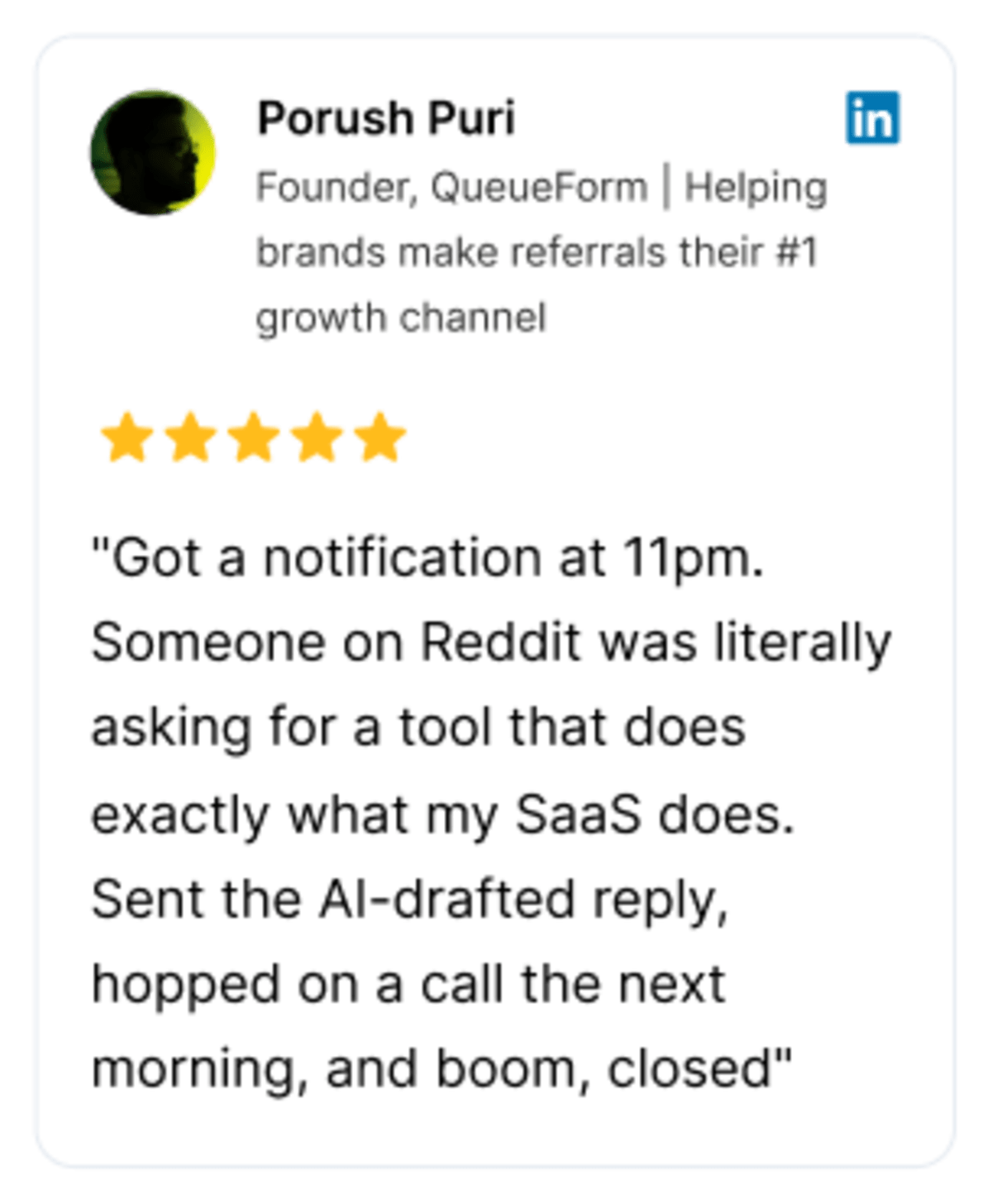
Search Reddit for people actively experiencing your pain point right now. Not just lurking — people who posted asking for solutions. These are warm leads. They already know they have the problem. They're already looking for something. Search: site:reddit.com "[your pain point]" "is there a tool". Respond to the post with value. Then DM: "I actually built something for this exact problem — happy to give you free access if you'd want to try it."
3. X (Twitter) — Real-Time Pain Monitoring
Set up saved searches on X for people expressing frustration with the problem you solve. Example searches: "[competitor name] is so frustrating", "wish there was a tool that [thing you do]", "anyone know how to [problem you solve]". These are your first early customers. They're raising their hand in public.
4. LinkedIn — Precision ICP Targeting
LinkedIn's search lets you filter by job title, company size, industry, and location. This is your best tool for finding early customers for B2B SaaS. Build a list of 200 people who match your exact ICP. Write 10 genuinely personalized messages a day. Offer a free trial or pilot with clear terms. Follow up once. A 5% conversion rate on 200 outreaches = 10 early customers. That's a real business.
5. Indie Hackers and Founder Communities
Other founders are often your first customers — especially if you're building a tool for founders, marketers, developers, or creators. Post on Indie Hackers: share your journey, your pain point, and your solution. Ask for early customers openly. The community actively supports early-stage products.
6. Niche Newsletters and Communities
Find newsletters in your niche and offer to sponsor a single issue or write a guest post in exchange for exposure. Newsletter audiences are highly targeted and trust the curator. Cost: often free or very low for early-stage products. Conversion: significantly higher than cold ads.

How to Close Your First Early Customers
Closing early customers isn't sales. It's trust.
They're not evaluating your product against 50 others. They're evaluating whether to trust you — a founder with an unproven product.
What builds that trust fast:
- Specificity: Show you understand their exact situation
- Responsiveness: Reply within hours, not days
- Transparency: Tell them what's built, what's not, and what you're working on
- Low commitment: A 30-day trial, a monthly plan, an easy out
- Personal onboarding: Get on a call. Walk them through it. Answer questions live.
The first sale is always about the founder as much as the product.
Stop searching. Start finding.
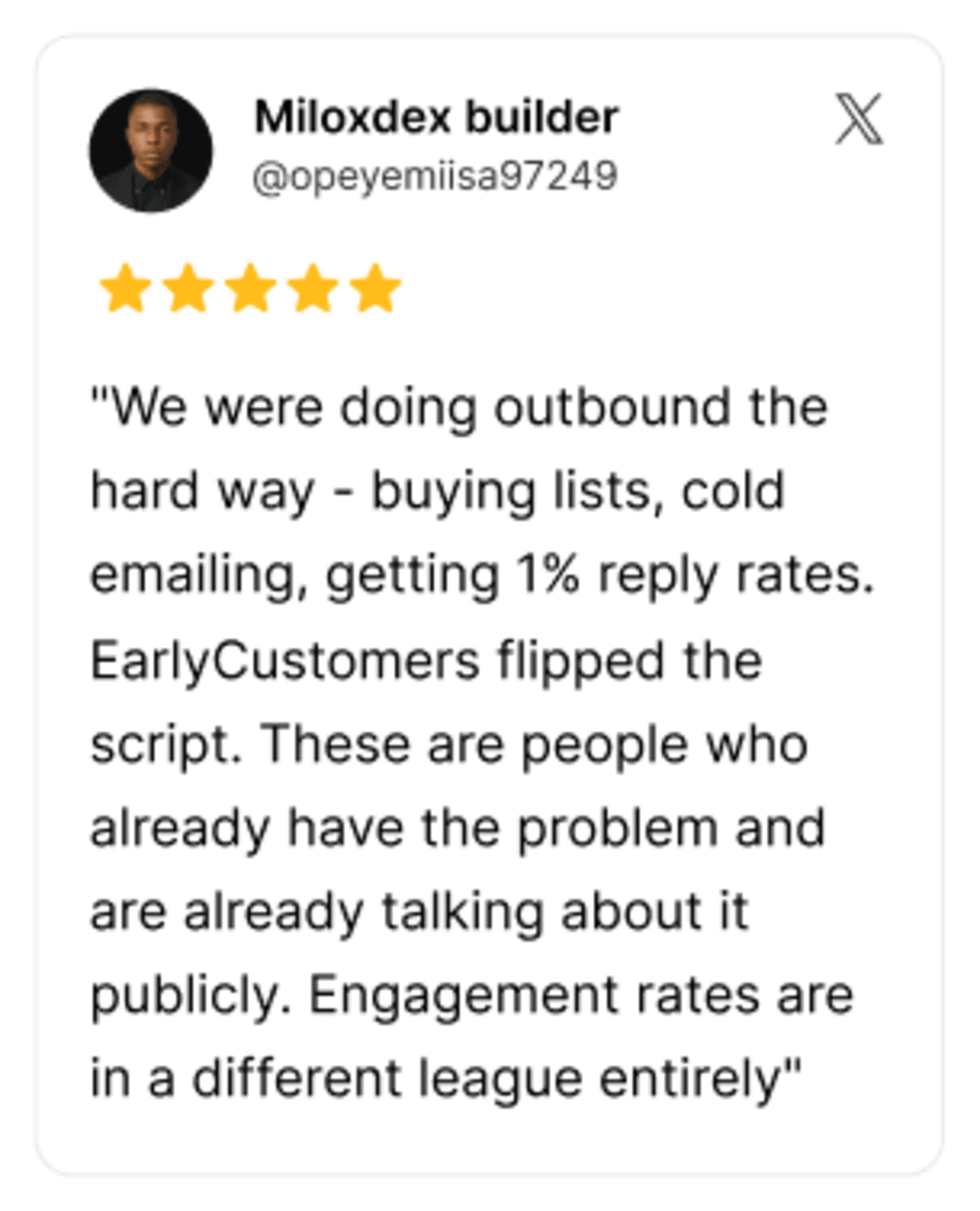
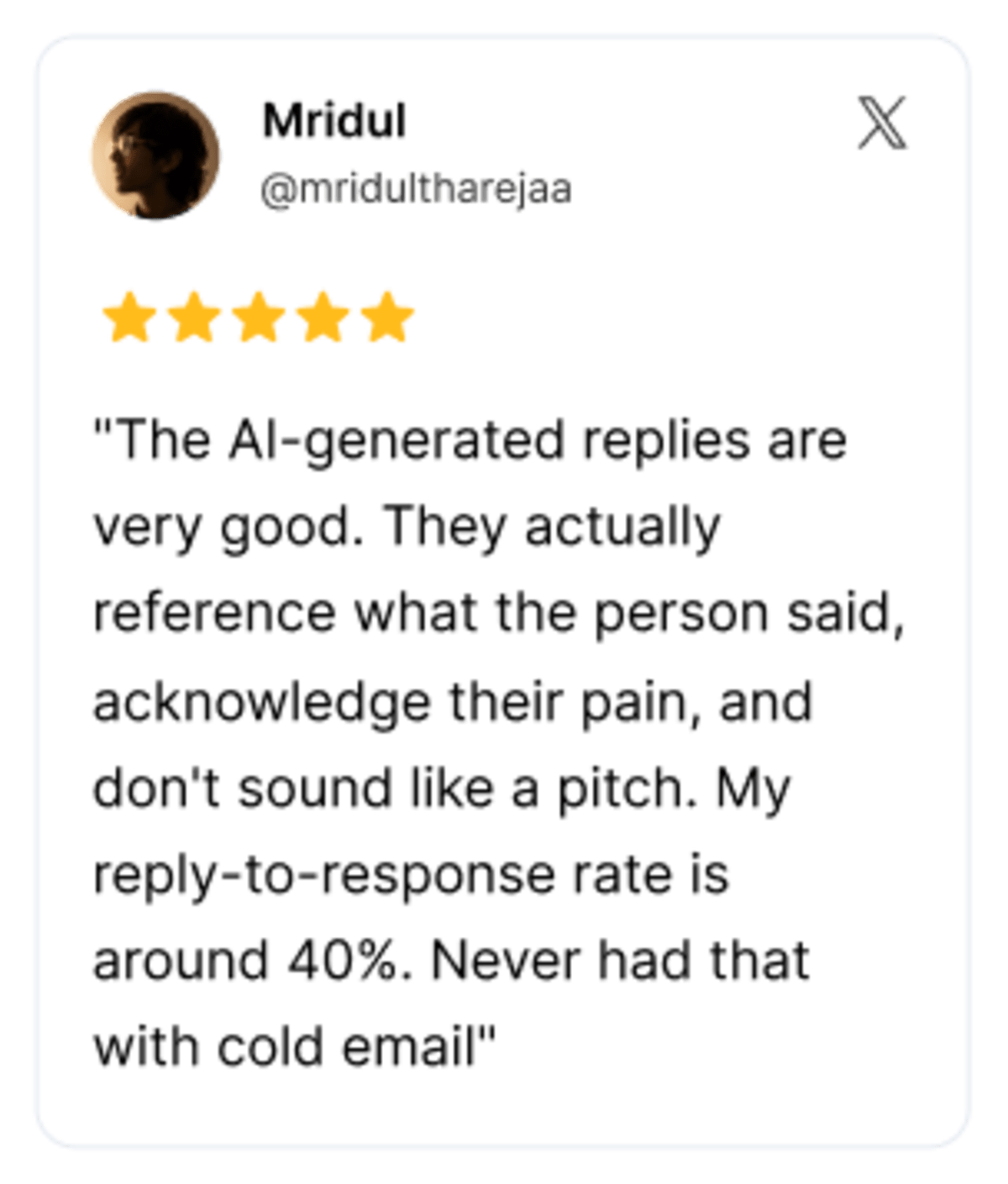
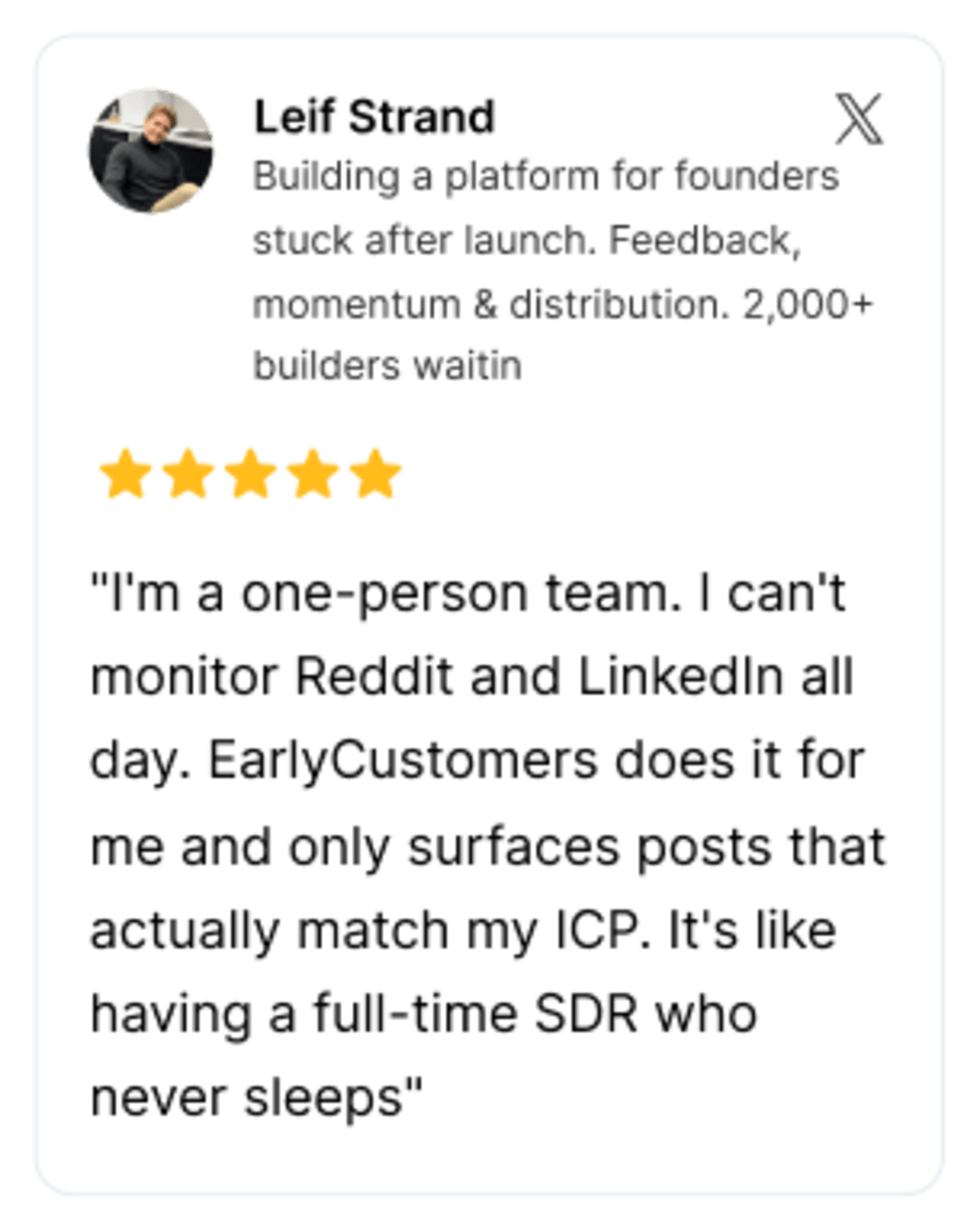
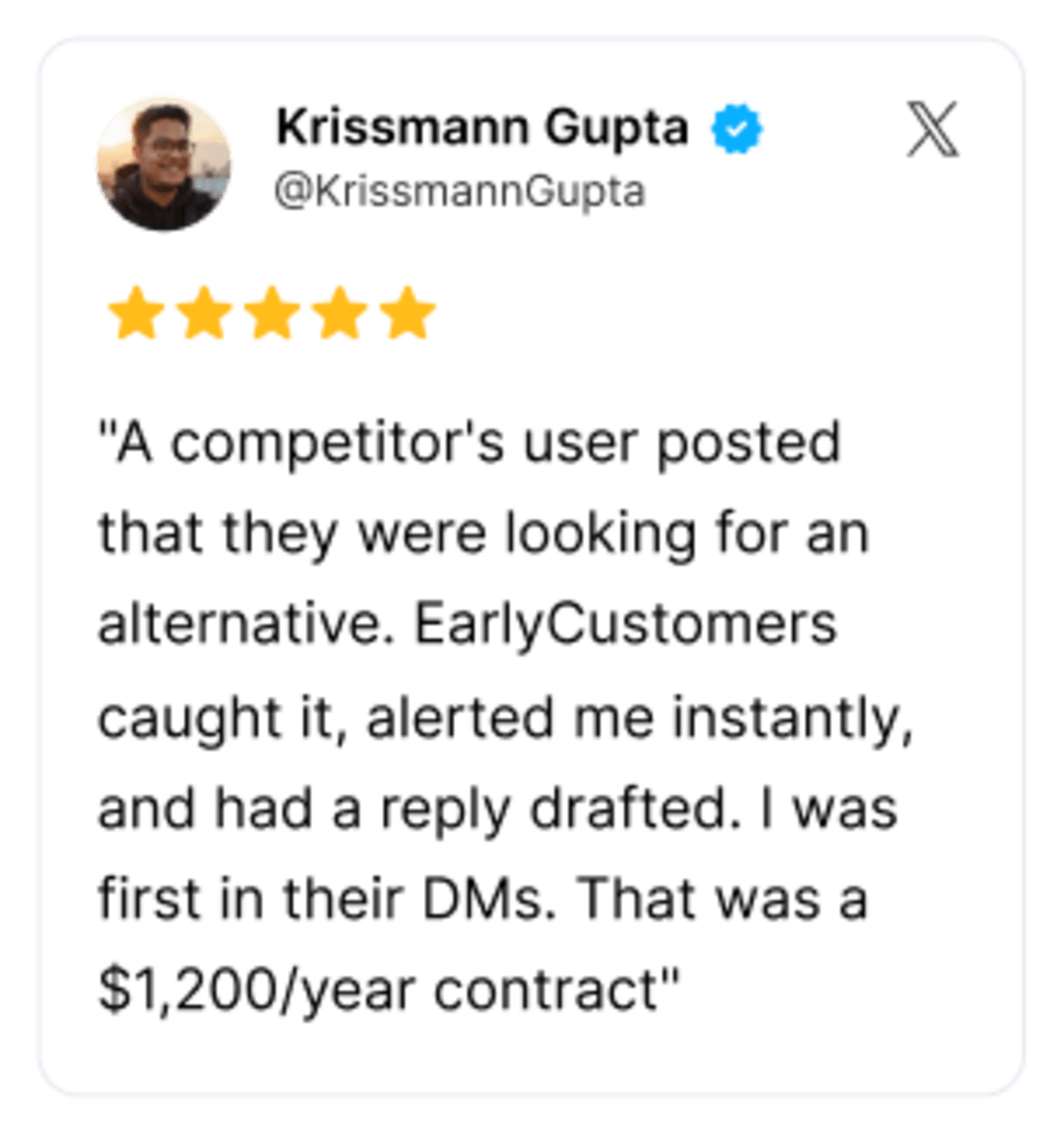
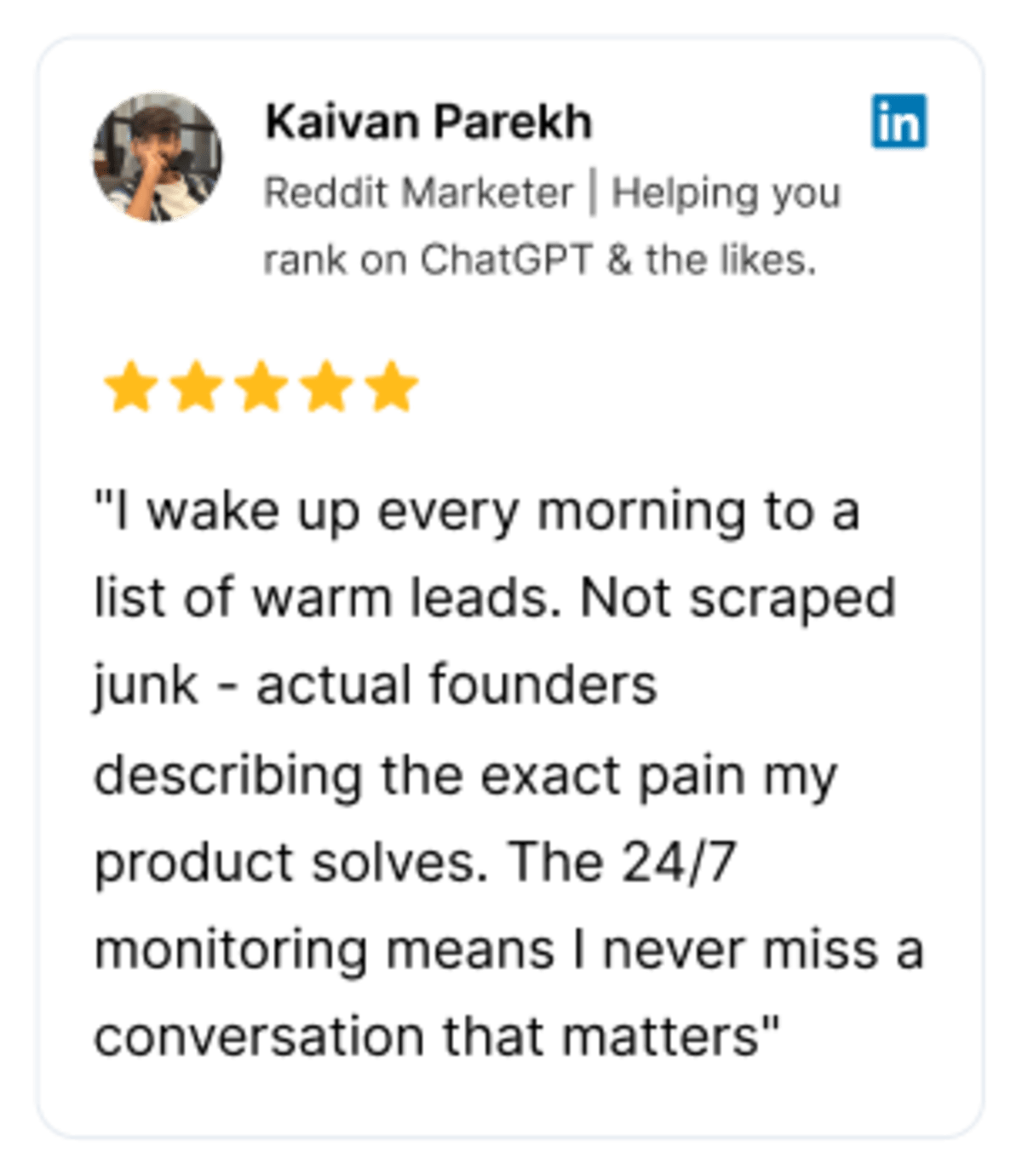
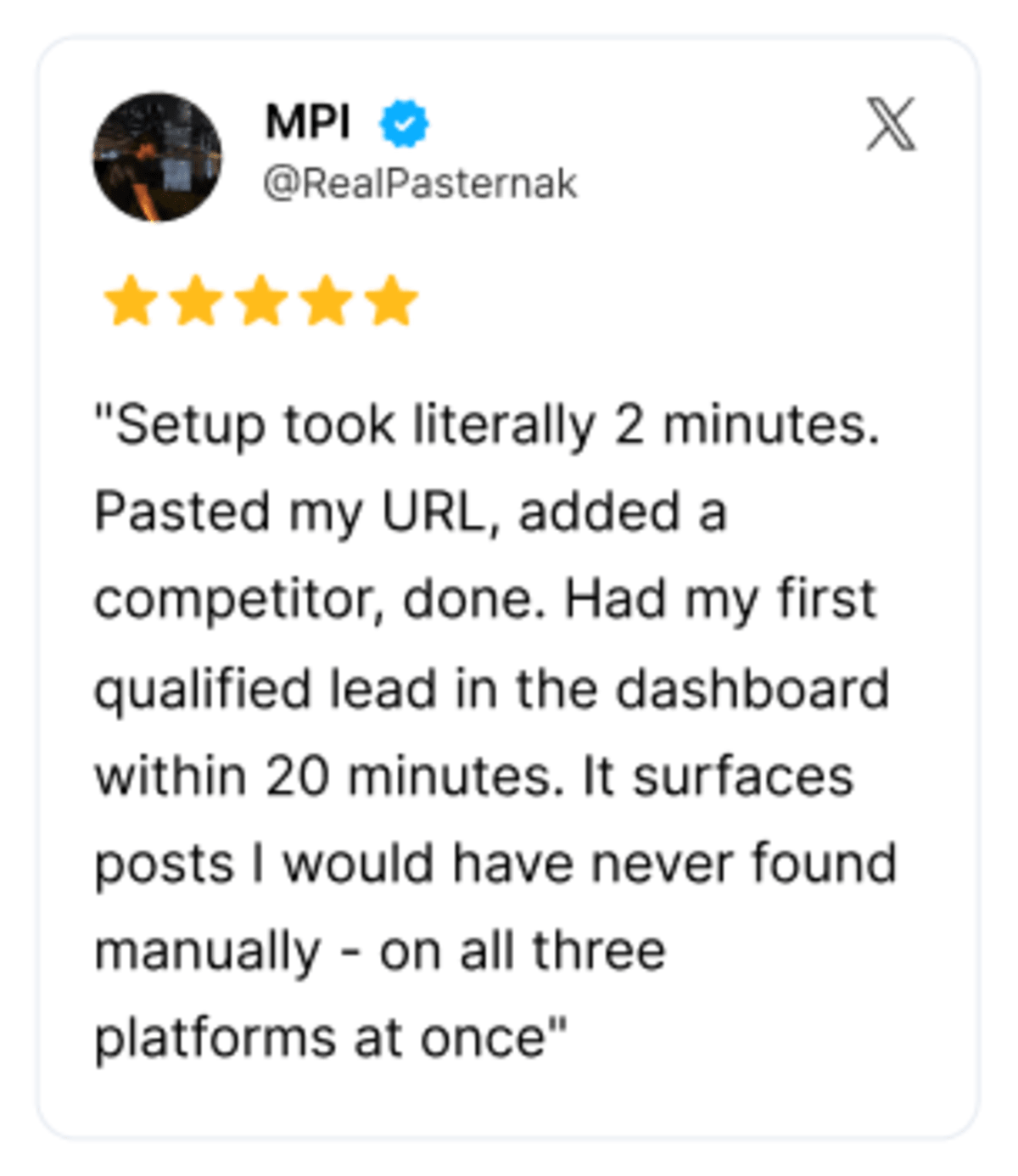
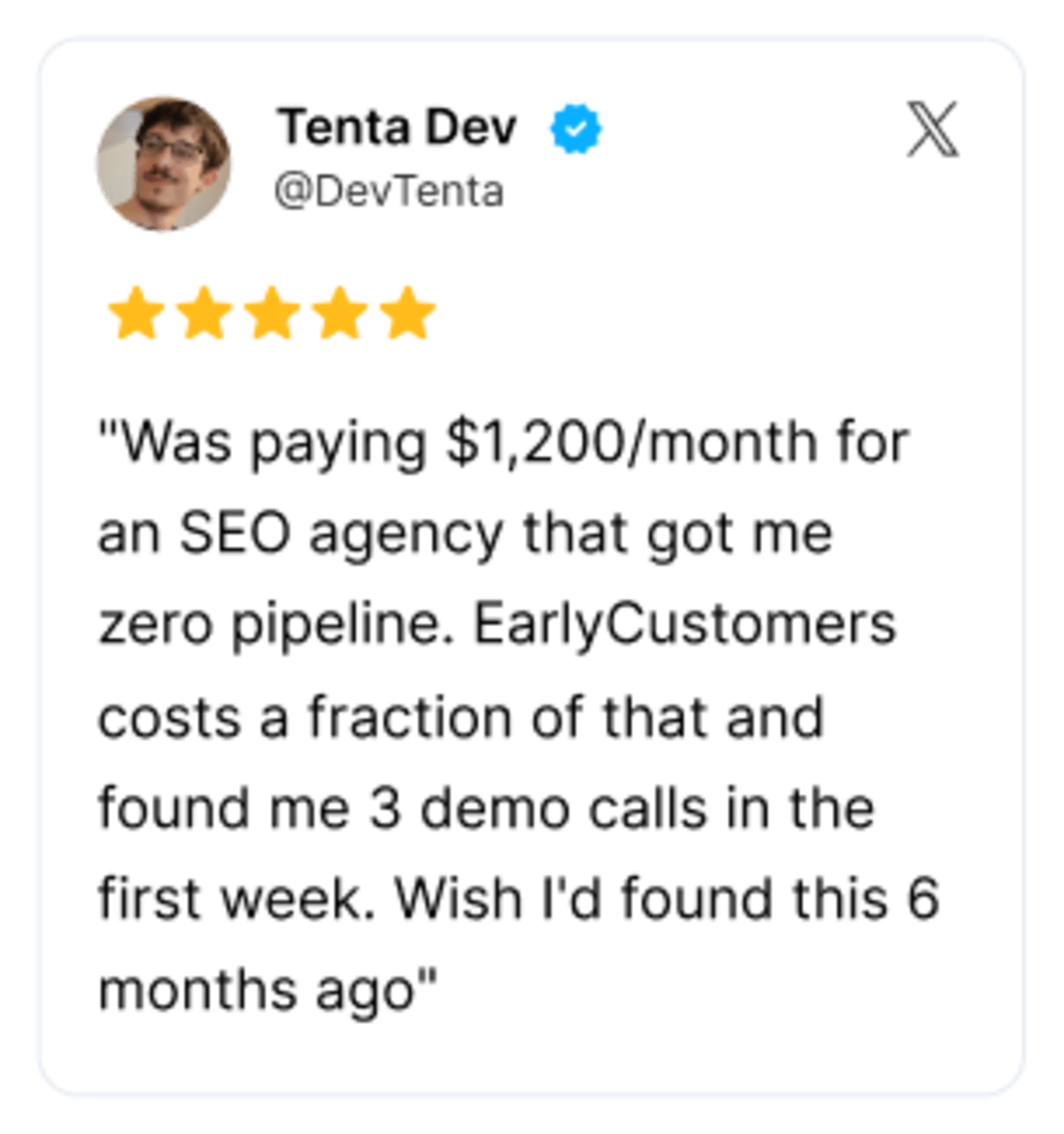
EarlyCustomers monitors Reddit, LinkedIn, and X 24/7 for people actively asking about your problem — and delivers them to you before your competitors even see the post.
Find your early customers →