Getting your first 100 users is the hardest milestone in any startup's life.
Not because it's technically difficult. Because nobody knows you exist yet — and you probably have $0 to change that.
The good news? Every founder who's ever crossed 100 users did it the same way: manually, personally, and without a marketing budget. This guide breaks down exactly how.
Why the First 100 Users Feel Impossible
When you launch, you're competing with thousands of other products launching the same week. Product Hunt is flooded. Reddit is skeptical. Your Twitter following is 200 people, half of whom are other founders.
And the advice you keep seeing — "just build in public," "post on Reddit," "do cold outreach" — feels vague.
Here's the thing: all of it works. Just not the way most people execute it.
The founders who hit their first 100 early users aren't doing anything magical. They're just doing the unsexy manual work that everyone else skips.
Step 1: Get Clear on Who Your First User Actually Is
Before you do any outreach, any posting, any anything — you need to answer this question:
Who is the one person most likely to say yes immediately?
Not your "target market." Not your ICP slide deck. One specific type of person, with one specific pain, who would benefit today.
Examples:
Not "SaaS founders" → "Solo SaaS founders with under $5k MRR who are handling their own customer support"
Not "marketers" → "Freelance email marketers who manage 35 clients and do everything in Google Sheets"
The tighter this definition, the faster you get your first 10 users. And the first 10 always unlock the next 90.
Step 2: Go Where They Already Complain
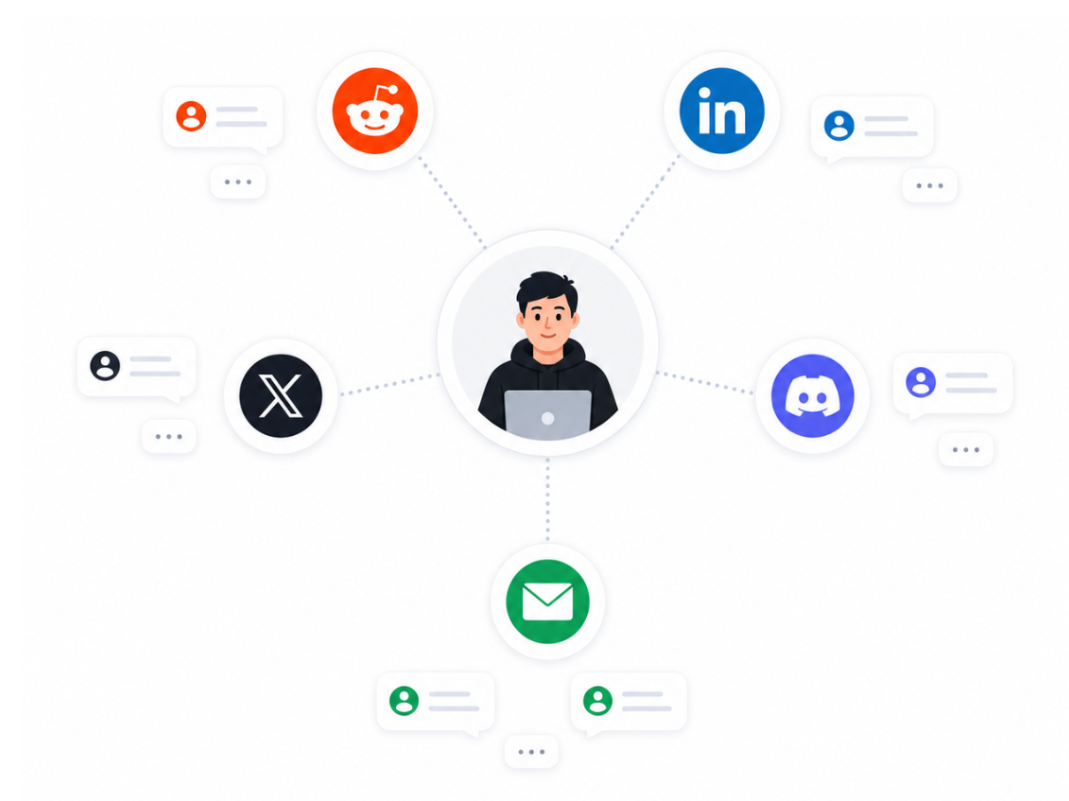
Your early users are already online, already frustrated, and already talking about the exact problem you solve. Find those conversations.
On Reddit: Search inside niche subreddits for phrases like: "how do I [problem you solve]", "struggling with [pain point]", "is there a tool that does [thing your product does]". Don't drop your link. Comment with genuine value. Mention your product only when it's directly relevant — and even then, frame it as "I built something for exactly this, happy to give you free access."
On X (Twitter): Search: "[pain point]" lang:en -filter:retweets. Engage with people actively experiencing the problem. Not to sell — to start a conversation.
On LinkedIn: Search posts with phrases like "just launched," "looking for feedback," or "first customers." These are founders in the same boat who understand the struggle. They share tools. They become users.
Step 3: Do Manual Outreach (Yes, One by One)
Your first 100 users won't come from a campaign. They'll come from individual conversations. This is founder-led sales — and it's the most effective early traction strategy that exists at zero cost.
Here's a DM template that actually works:
"Hey [name] — saw your post about [specific problem]. I've been building something that solves exactly that. Happy to give you free early access if you'd want to try it and tell me what you think. No pressure at all."
That's it. Short. Specific. Human. Not a pitch deck. Send 20 of these a day for a week. You'll get users.
Step 4: Build in Public Before You Launch
This is the part most founders skip because it feels pointless before you have users. It's not pointless. It's how you get users.
Post about what you're building, who it's for, what problem it solves — before launch. Weekly, if possible. Even if nobody's watching.
Why it works: It builds an audience of early adopters who are already warm when you launch; it attracts other founders who become your first users and promoters; it creates searchable content that surfaces when people look for your solution.
The founders who build in public for 60–90 days before launch almost always have a waitlist by the time they ship.
Step 5: Use Niche Communities, Not Big Platforms
The biggest mistake: posting in r/startups or r/Entrepreneur and expecting users. Those communities are full of other founders, not your customers.
Find the community where your target user hangs out: Indie Hackers, specific Discord servers, Slack groups, Facebook groups, niche subreddits (r/freelance, r/productivity, r/marketing, etc.). Show up, add value for a few weeks, then mention your product naturally.
Step 6: Make It Ridiculously Easy to Say Yes
Your first 100 users are taking a risk on you. Reduce that risk to zero.
"Free for the first 100 users, forever"
"No credit card — try it in 2 minutes"
"Founding member access — shape how we build this"
"I'll personally onboard you and fix anything that's broken"
Early users don't want a deal. They want to feel like insiders — like they're getting something before everyone else. Give them that.
What Not to Do
- Don't launch on Product Hunt as your primary strategy. It works for awareness, not for getting sticky early users.
- Don't run ads before 100 users. You don't know enough yet to spend money.
- Don't post once and give up. Distribution compounds. Week 3 outperforms week 1 almost every time.
- Don't optimize the product instead of doing outreach. More features won't fix a distribution problem.
The Pattern Behind Every "Overnight Success"
Every startup you've seen blow up had a version of the same story: a founder who talked to users obsessively before launch, did embarrassingly manual outreach to get the first 10, posted consistently even when nobody was watching, and treated early users like the most important people in the world. Because they were.
Your first 100 users are not just a number. They're your product-market fit signal, your first testimonials, your word-of-mouth engine, and your roadmap. Get them manually. Treat them incredibly well. Everything else follows.
Ready to find your first 100 users?
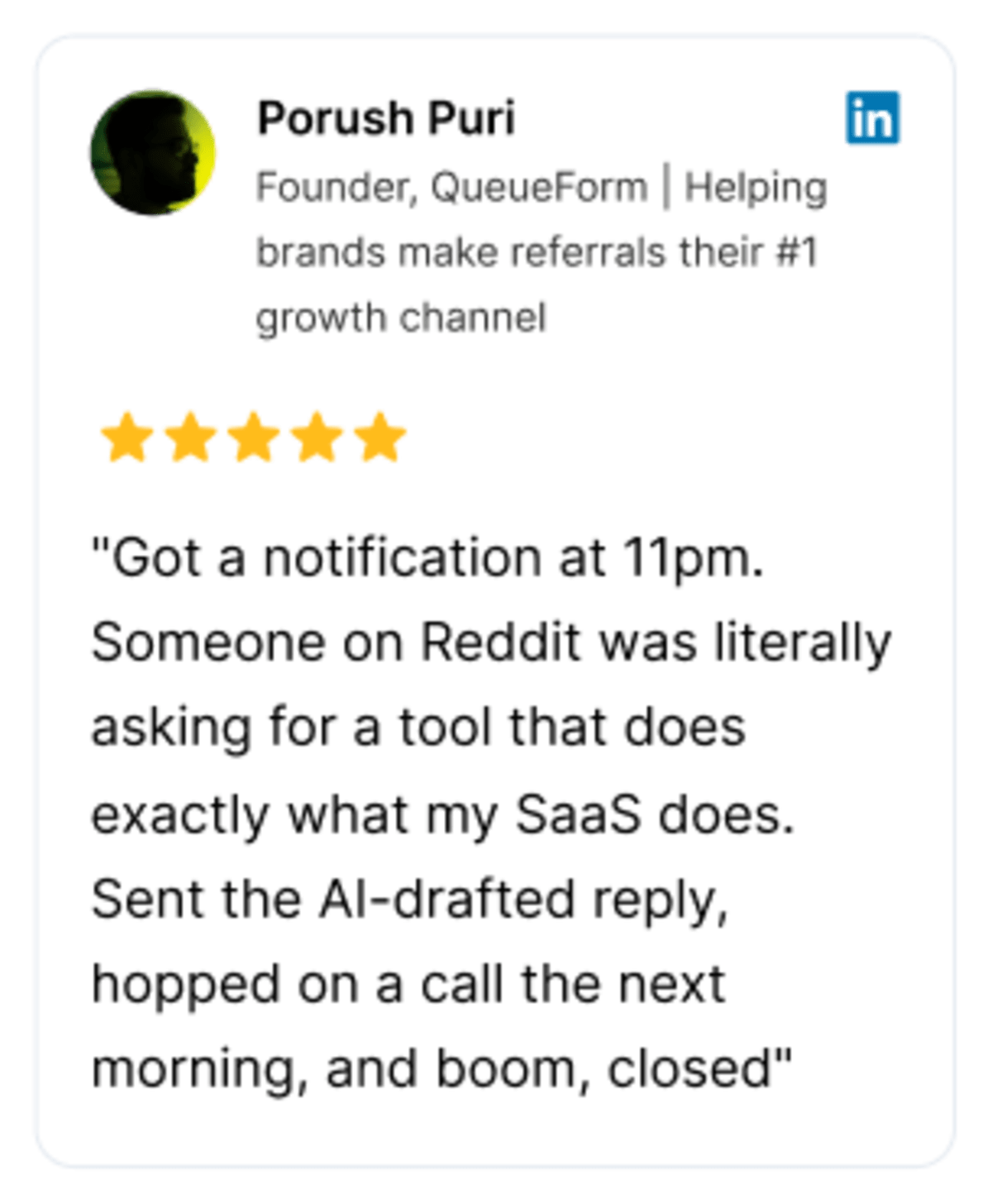
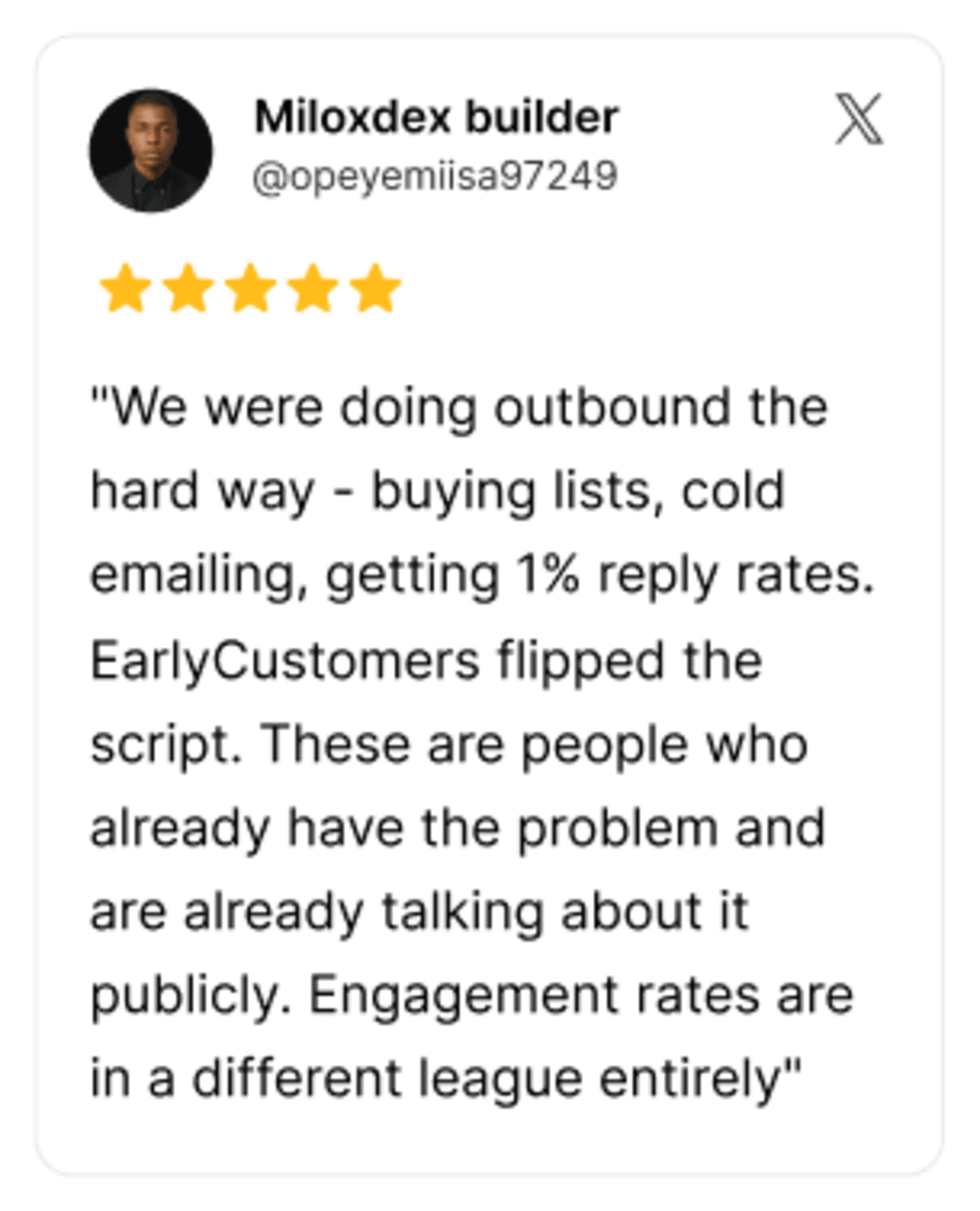
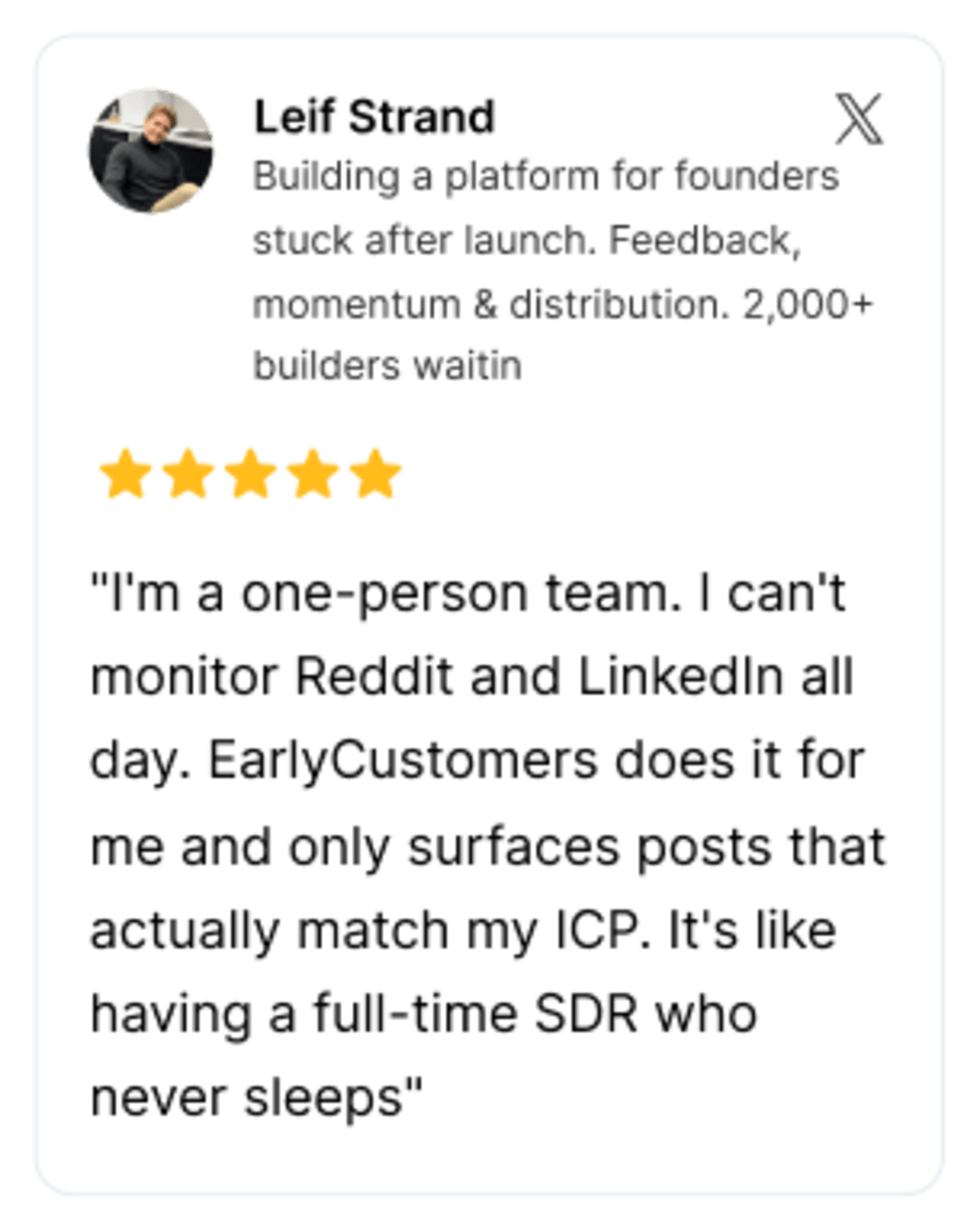
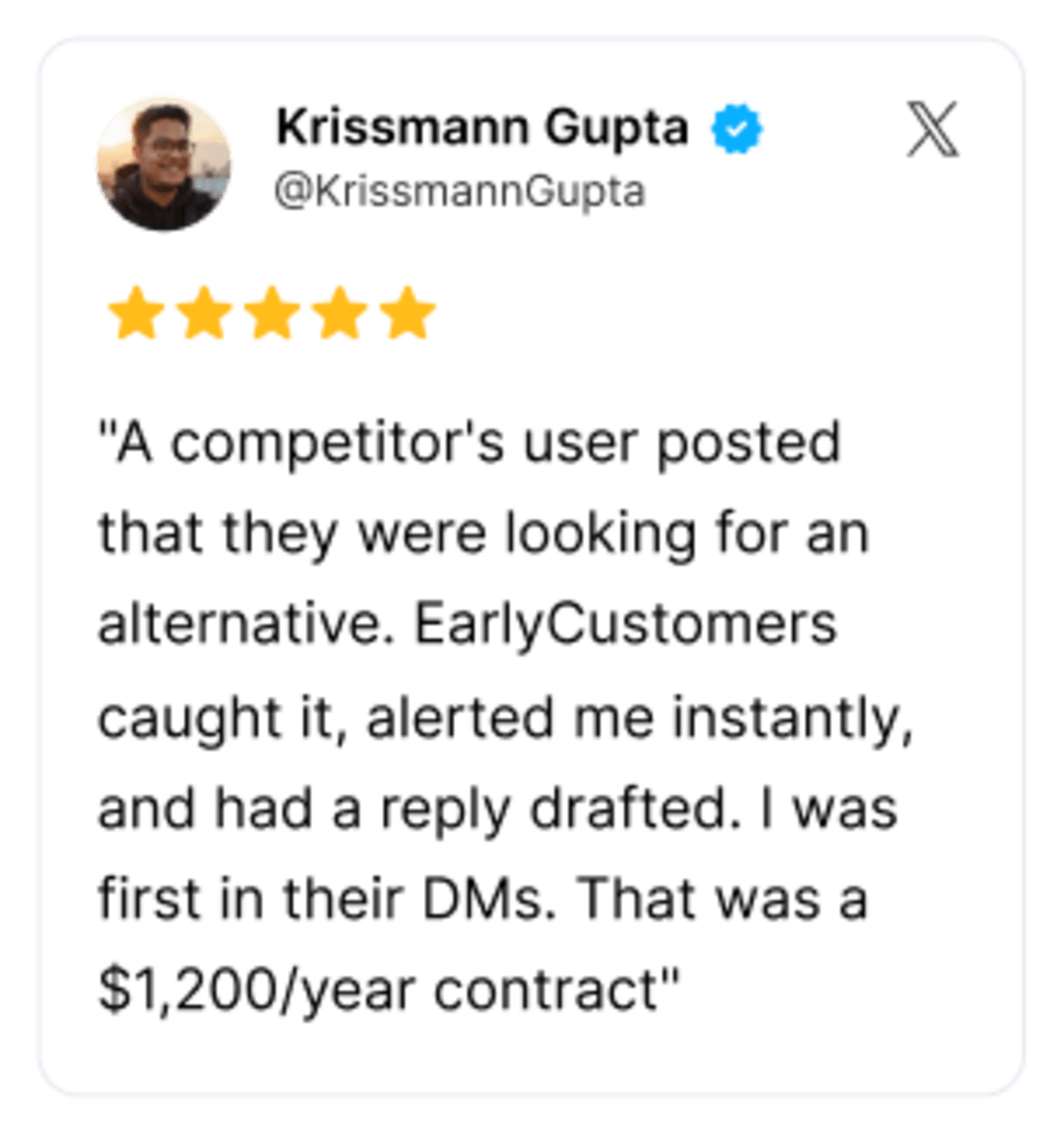
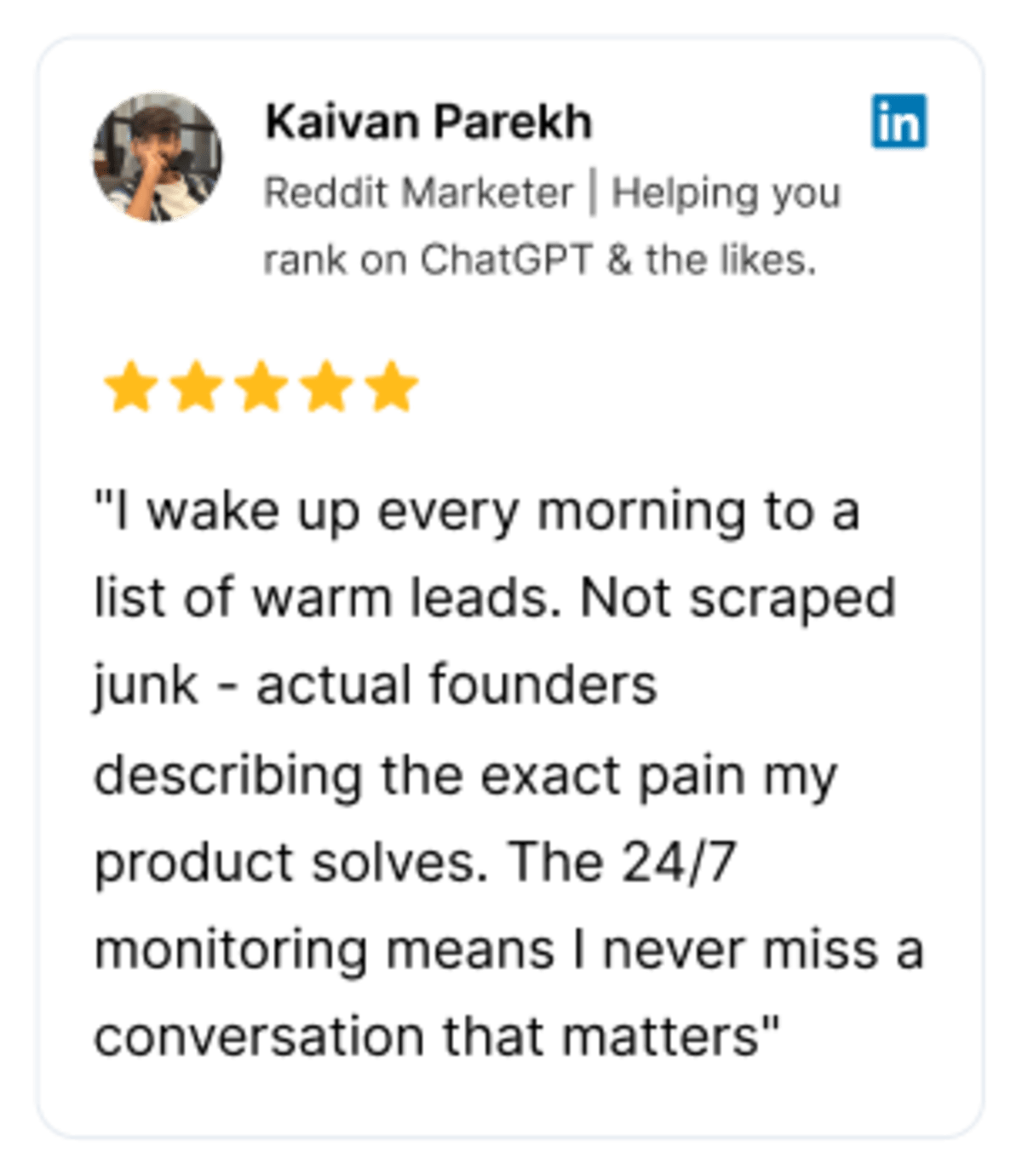
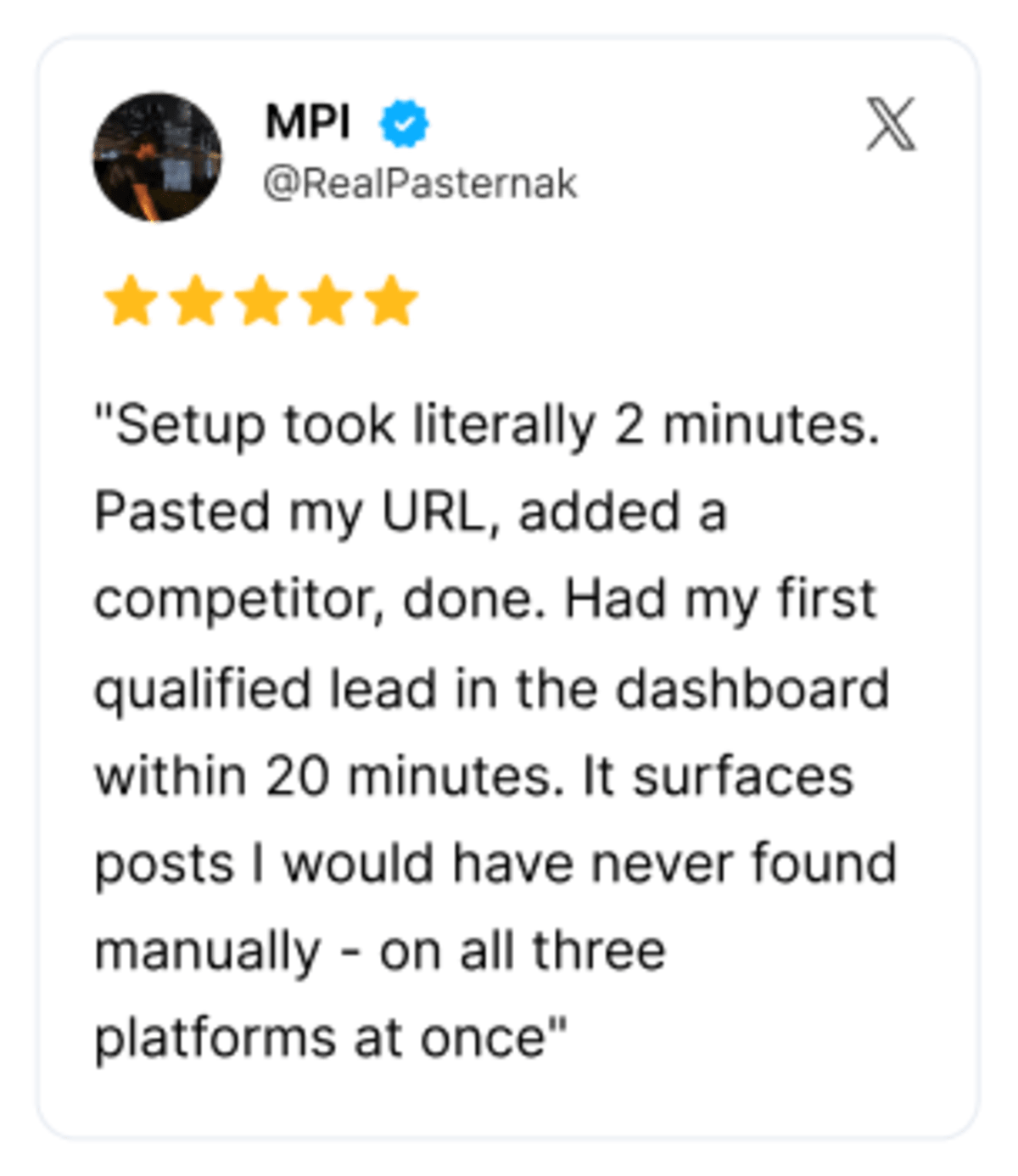
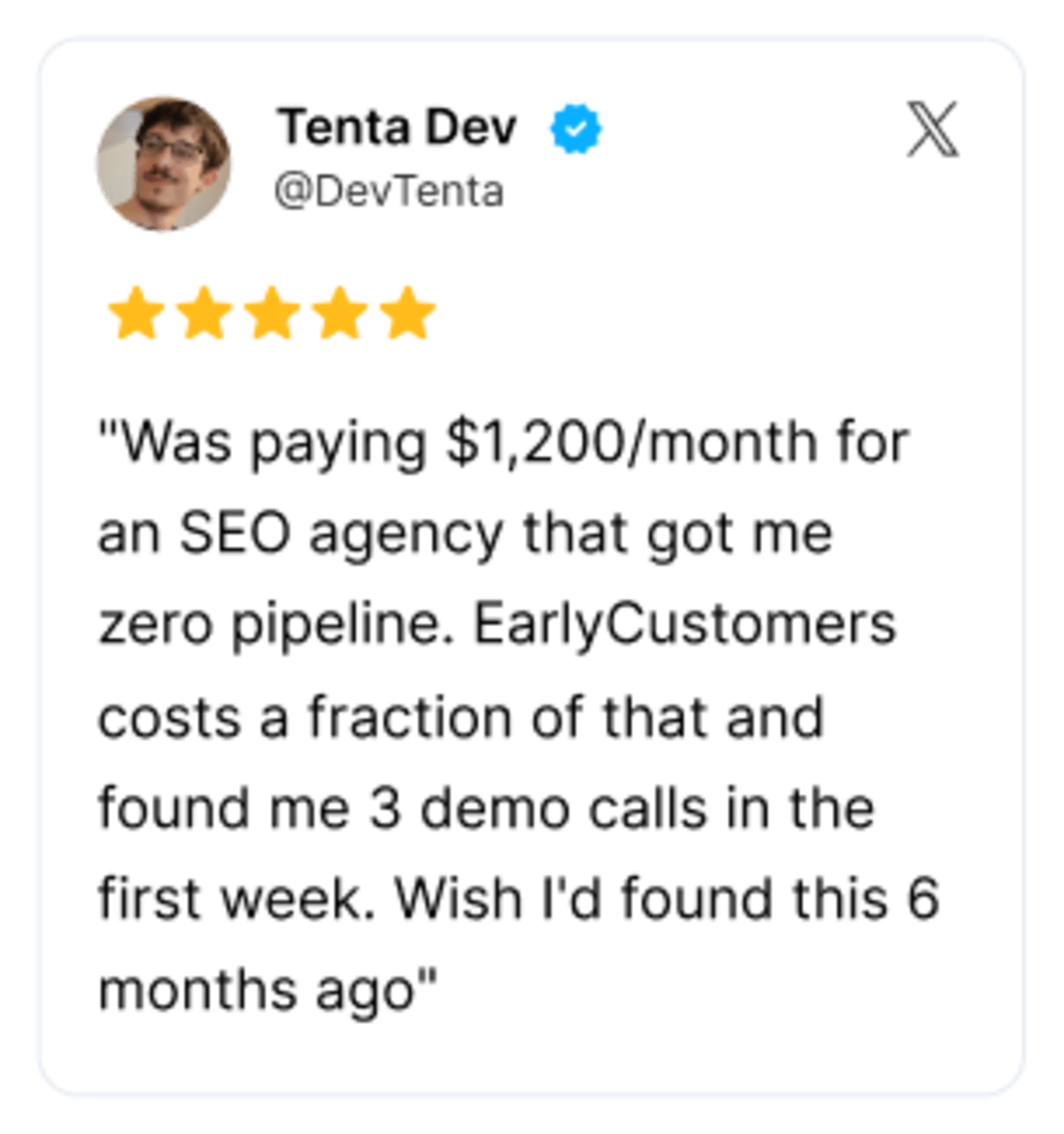
EarlyCustomers monitors Reddit, LinkedIn, and X 24/7 for people actively asking about your problem — and puts them in front of you before your competitors even see the post.
Start finding early customers →