Why most ICP discovery fails before it starts
The single biggest mistake early-stage founders make isn't building the wrong product. It's building for a customer they invented and only discovering that two years and $200K later.
They guess based on their own experience
"I used to be a marketing manager, so marketing managers are my ICP." This might be right. It might also be completely wrong.
They copy a competitor's apparent audience
They look at who a competitor seems to target and assume that's the right ICP for them too. But competitors often target the wrong people as well.
They survey their network
They send a Google Form to 50 people they already know and call it "customer discovery." Your network is biased toward people like you and polite people who won't tell you the truth.
All three approaches rely on what people say rather than what they do. Real ICP discovery means finding people who are already expressing pain, already searching for solutions, and already considering purchasing not people you asked to imagine a hypothetical scenario.
Where your ideal customer actually hides
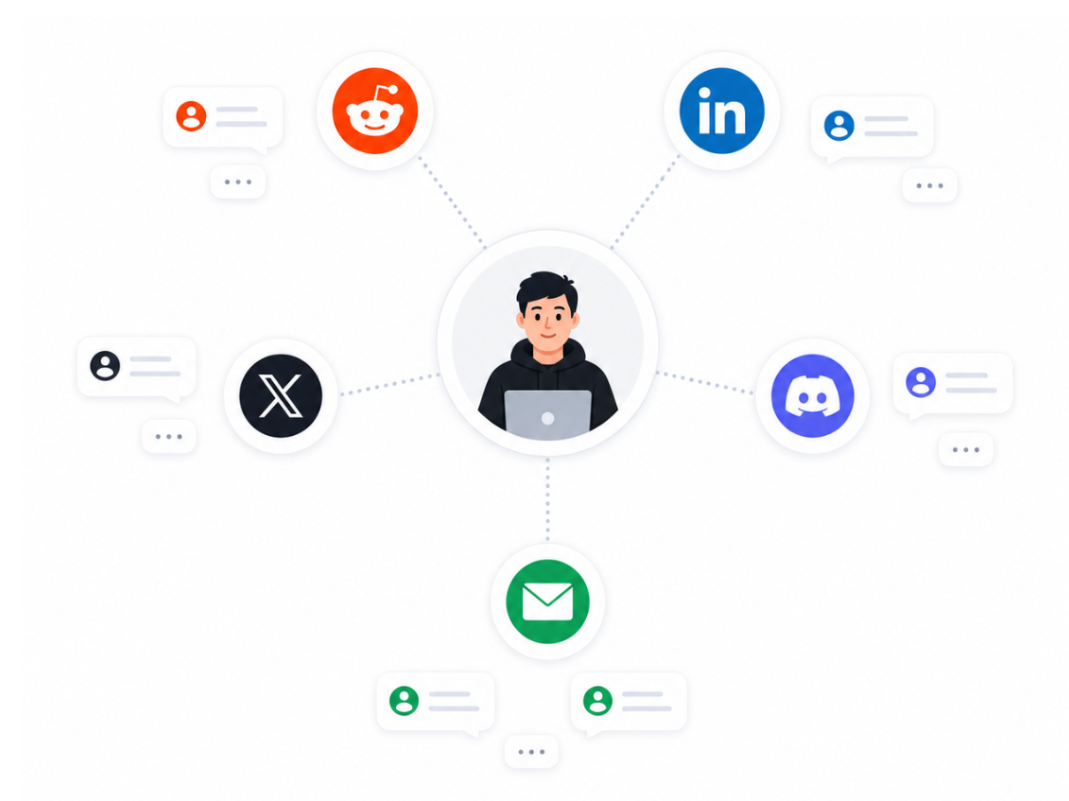
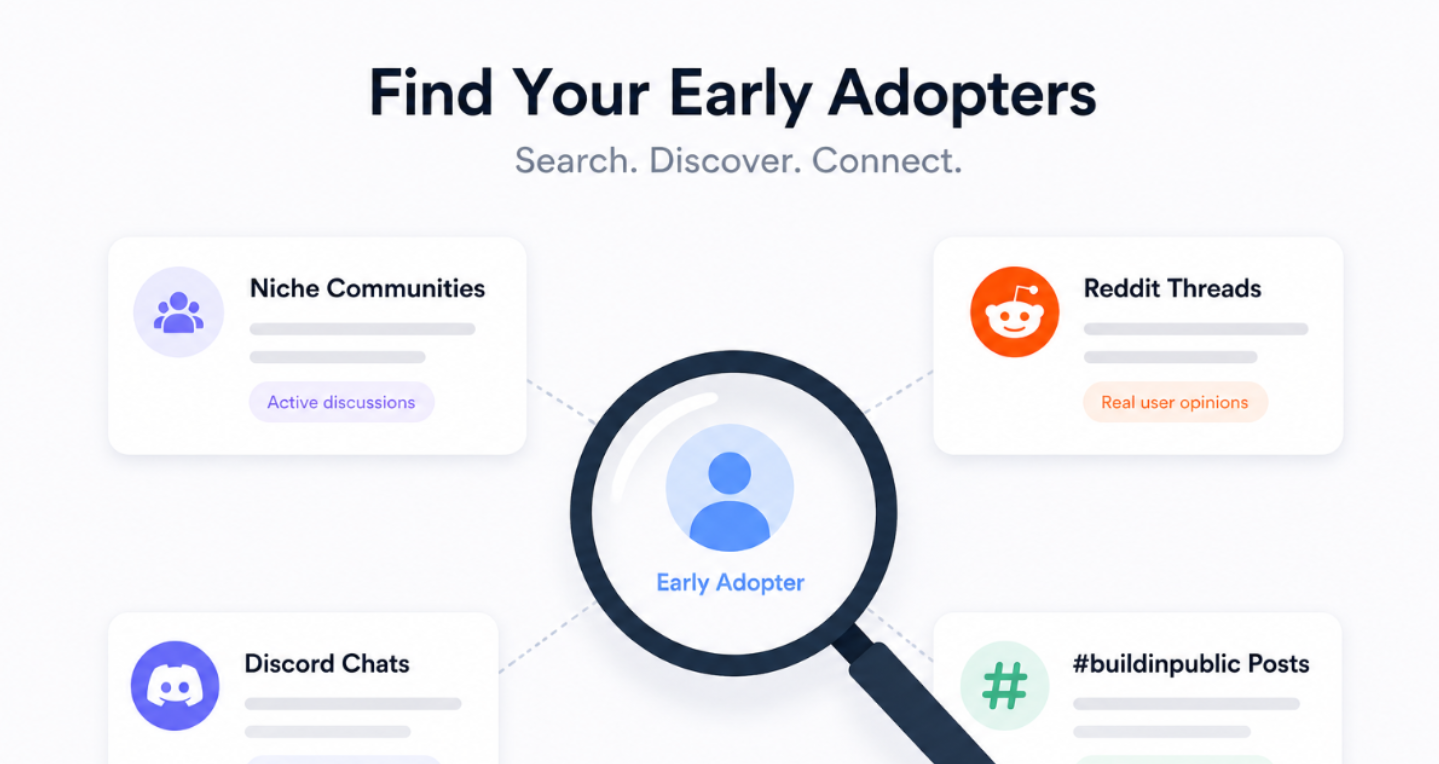
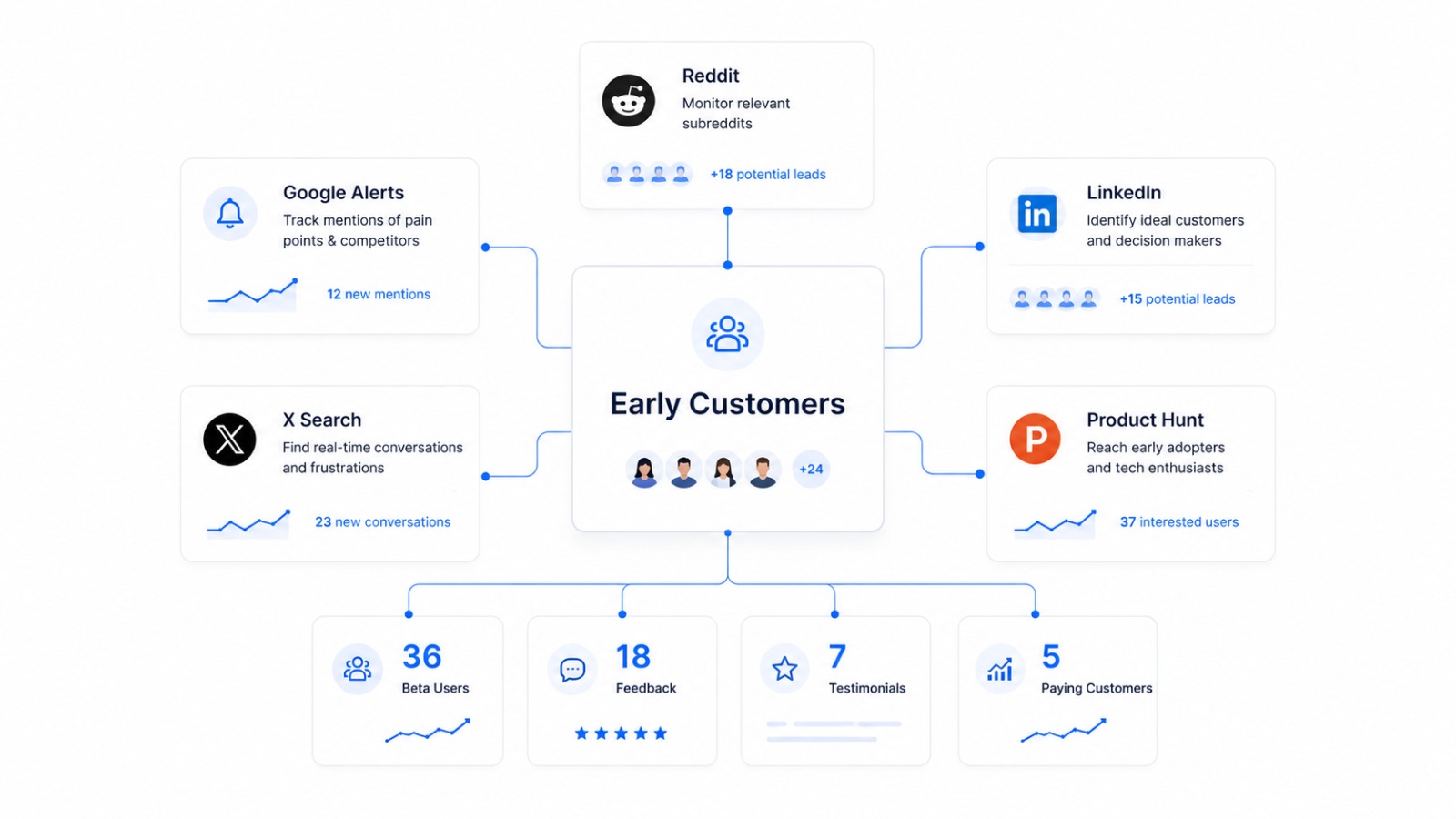
Your ICP isn't hiding. They're online every day, talking about their problems in public. The question is whether you know where to look.
Reddit Communities
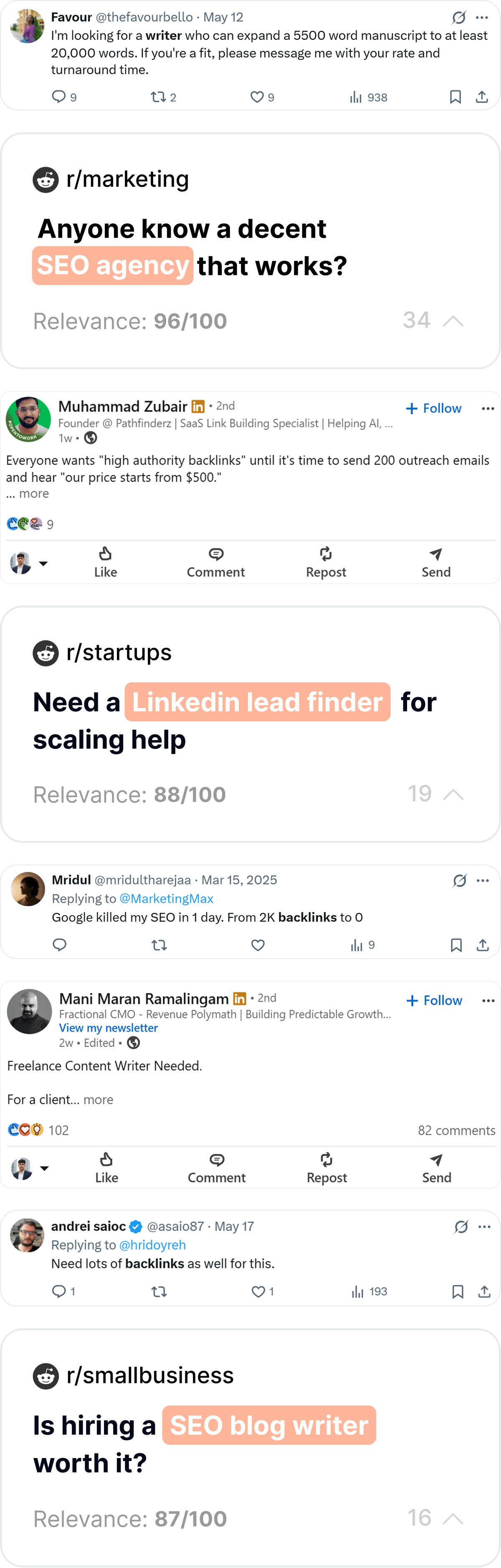
Reddit is the most honest social network on the internet. People ask raw, unfiltered questions because they're semi-anonymous. When someone posts "what CRM actually works for a 5-person team", they're a live buying signal.
LinkedIn Feed & Comments
LinkedIn shows you professional context that Reddit can't job title, company size, industry. When someone publishes a post about a frustration they're facing at work, their entire professional profile is attached.
X (Twitter) & #BuildInPublic
The #buildinpublic and #indiehacker communities on X attract founders who share everything including their struggles. If your ICP is early-stage founders, X is a goldmine.
Competitor Reviews & Alternatives
G2, Capterra, and ProductHunt reviews reveal exactly what your ICP hates about existing solutions. More importantly, people who post reviews are highly engaged buyers.
Low-intent noise
- "Anyone have thoughts on CRMs in general?"
- "What tools do you use? (general discussion)"
- Generic questions with no urgency or context
High-intent ICP signals
- "Struggling to track leads for my 3-person startup"
- "We just hired our 5th sales rep and our current tool is breaking"
- Posts mentioning a specific trigger event or deadline
The 5 buying intent signals you need to recognize
Not every post from a potential customer is equally valuable. Learning to score intent is what separates founders who find 10 promising leads a week from founders who spend 10 hours on one.
Active alternative-seeking ("I'm switching from X")
When someone says "We're leaving [Competitor] and looking for alternatives", they are a near-certain buyer within days or weeks. Highest-priority signal.
Explicit problem statement with urgency
Posts that describe a specific, time-bound problem they haven't solved yet. Phrases like "we launch in 3 weeks" indicate a real deadline driving the search.
Comparison requests ("X vs Y which is better?")
When someone is comparing specific tools or approaches, they're in the evaluation stage. High-value entry point into their decision process.
Recurring frustration with the status quo
Someone who consistently posts about the same problem across multiple threads is building up to a purchase. You can catalyze the decision.
Early-stage problem awareness
Posts where someone has just begun to recognize they have a problem. Lowest-intent but highest-volume use for content strategy and keyword mining.
Three "yes" answers = highest-priority lead. Two = follow-up. One = monitor only.
Finding your ICP on Reddit
Reddit is the single best platform for ICP discovery at the early stage. Here's the complete playbook for mining it systematically.
Role-based subreddits
r/marketing, r/sales, r/devops where your ICP congregates based on their job title or function.
Industry-based subreddits
r/ecommerce, r/legaladvice, r/realestateinvesting extremely concentrated ICP density.
Stage-based subreddits (for B2B/founder tools)
r/startups, r/SaaS, r/indiehackers, r/smallbusiness
Tool-specific subreddits
r/hubspot, r/salesforce, r/notion, r/zapier people posting here are confirmed software buyers.
PAIN KEYWORDS (highest intent):
"struggling with [problem]"
"can't figure out [problem]"
"frustrated by [problem]"

ALTERNATIVE-SEEKING (highest intent):
"looking for alternatives to [competitor]"
"switching from [competitor]"
"[competitor] is too expensive"

EVALUATION KEYWORDS (high intent):
"[Tool A] vs [Tool B]"
"best [tool category] for [company type]"
Finding your ICP on LinkedIn
LinkedIn gives you something Reddit can't: a complete professional profile attached to every signal. When someone posts a problem on LinkedIn, you know exactly who they are.
Search by keyword in posts (not profiles)
Switch LinkedIn search to "Posts" mode and search for your problem keywords. "struggling with lead generation", "looking for a CRM for small team" these searches surface people currently expressing the problem.
Profile the authors of high-intent posts
Every post has a full profile attached. Note: job title, company size, industry, seniority. After 20 profiles, you'll see patterns that define your ICP.
Mine the comments for second-order ICP data
When someone posts a problem and 15 people comment agreeing, those commenters are just as much your ICP as the original poster.
Search company pages of your best-fit leads
Growing companies often have multiple people experiencing the same problem and only one of them may have posted about it.
Build a list of 50 LinkedIn profiles that you believe match your ICP. Score each one: How much do they post? How similar are their backgrounds? The profiles with the highest scores define the center of gravity of your real ICP.
Finding your ICP on X/Twitter
X has a different ICP discovery dynamic than Reddit or LinkedIn. The signal-to-noise ratio is lower but when you find a signal, it's often from someone at exactly the right moment to buy.
Find frustrated users:
"[problem] -filter:links"
"[competitor] frustrated OR angry OR switching"

Find the #buildinpublic community:
"#buildinpublic [your problem keyword]"
"#indiehacker looking for OR struggling with"

Time-based (for real-time outreach):
Add "since:2026-06-01" to only see recent posts
Sort by "Latest" not "Top" to see current activity
On X, if you respond to a high-intent post within 2 hours, you're often the first thoughtful reply. After 6 hours, the poster has usually moved on. Monitor your key keywords in real-time.
Validating your ICP with discovery calls
Social listening gives you hypotheses. Discovery calls give you validation. You need both and you need to run them in the right order.
"What triggered you to look for a solution now?"
Reveals the trigger event if 8 out of 10 people give the same trigger, you've found the circumstance that defines your highest-intent buyer moment.
"What have you tried before, and why didn't it work?"
Reveals your competitive landscape and what gaps exist in the market.
"Walk me through what a bad week looks like with this problem"
Gets people to describe their pain in their own words the exact language you'll use in your copy.
"Who else in your organization does this affect?"
Reveals the buying committee who else needs to be convinced.
"If this problem were solved tomorrow, what would be different?"
Reveals the outcome your ICP is actually buying not the feature, but the result.
Competitor ICP mining the unfair shortcut
Your competitors have already done years of ICP discovery. You can compress that learning into days by systematically mining their public data.
- Their customer testimonials and case studies every testimonial shows you a real customer's job title, company, and the specific problem they solved.
- Their G2 / Capterra / Trustpilot reviews public reviews show who's buying, why they bought, what they liked, and what they hated.
- Reddit threads mentioning competitors search "[competitor name]" on Reddit. You'll find people complaining, switching, and recommending alternatives.
- Their job postings the industries, company sizes, and technical requirements in their job ads reveal their customer base.
The highest-intent leads you'll ever find are people actively switching away from a competitor. These people have budget, they're dissatisfied, and they're looking right now. Search "[competitor] alternatives" and "[competitor] review" on every platform weekly.
| Review Section | What It Tells You |
|---|---|
| "What do you like best?" | Must-have features for your build list |
| "What do you dislike?" | Gaps in the market you can fill |
| Star rating + job title | Which segment to target first |
| "Problems solved" | Your marketing messaging |
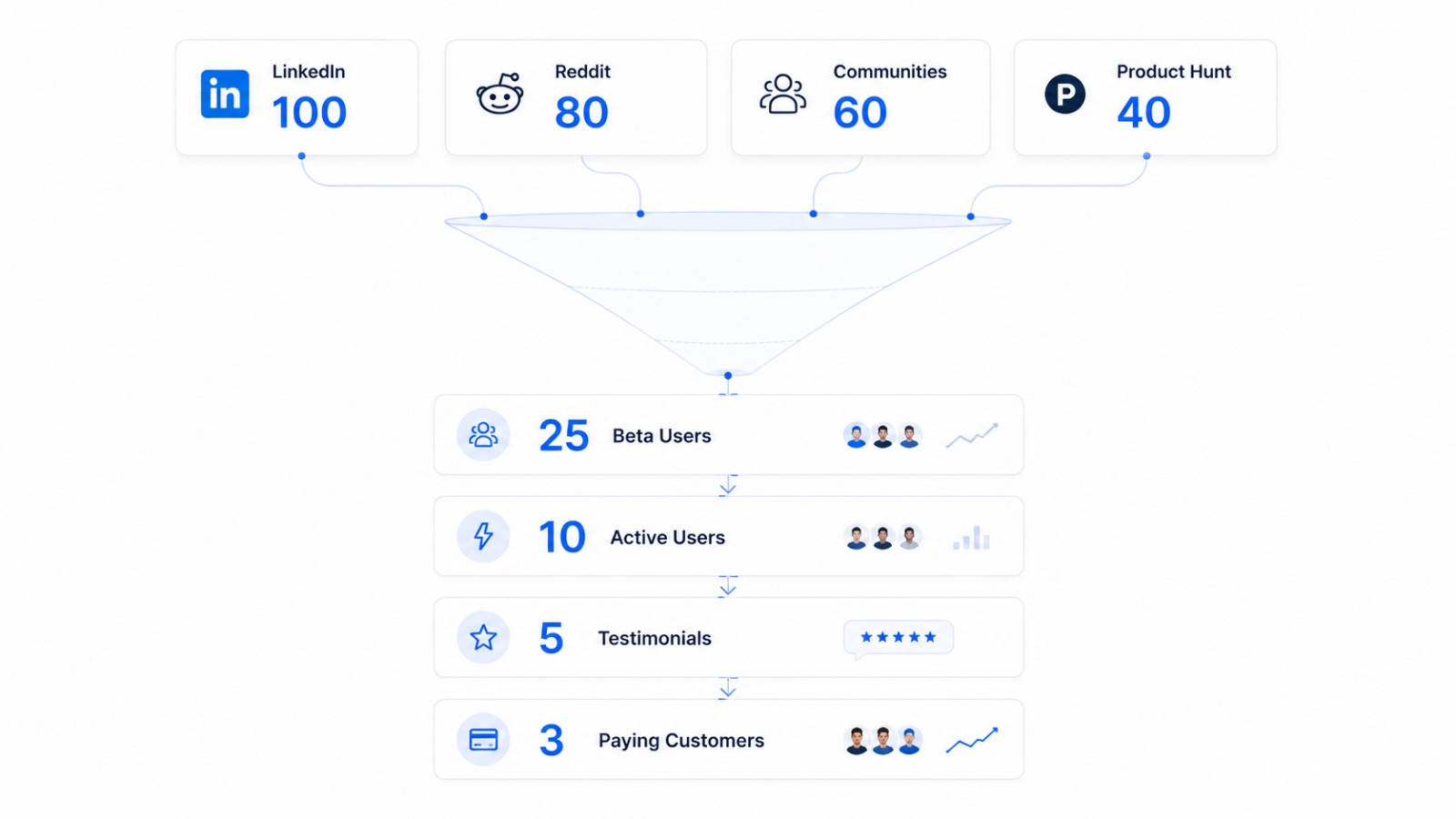
From ICP discovery to your first paying customer
All the discovery in the world is worthless if it doesn't lead to revenue. Here's how to close the loop between finding your ICP and converting them.
Engage before you pitch
When you find a high-intent post from your ICP don't pitch. Reply with genuinely useful information. Do this for 35 posts from the same person before you even think about a direct message.
DM with context, not a pitch
Reference the specific post that showed you they were a fit. "I saw your post about struggling with lead tracking I've been building something specifically for that problem."
Offer the discovery call as value, not a sales call
"I'd love 20 minutes to walk you through how we're solving this and if it's not a fit, I'll share everything we've learned that might help you regardless."
Paste your URL get an ICP hypothesis instantly. Real-time monitoring across Reddit, LinkedIn, and X. Intent scoring for every lead. Competitor tracking. AI-drafted replies. Lead relevancy explanations.
Stop building for a hypothetical customer. Find the real ones.
EarlyCustomers.com finds people already posting their problems on Reddit, LinkedIn, and X ranked by buying intent, with AI-drafted replies ready to send. No cold lists. No ad spend. Just high-intent leads who need what you're building.
Find My ICP Automatically See pricing