Cold outreach has a bad reputation because most people do it badly.
They send generic templates, follow up aggressively, pitch immediately, and wonder why nobody responds.
Done right — with specificity, patience, and genuine value — cold outreach is still the most reliable way for a B2B founder to get their first paying customers. No budget required.
This guide shows you how to do it right.
Why Cold Outreach Still Works for B2B Founders
Ads require budget and data you don't have yet. Content takes months to compound. Referrals require satisfied customers you haven't acquired yet.
Cold outreach requires only three things:
- A clear picture of who your early customer is
- Something genuinely valuable to offer them
- The discipline to send messages every day
For early-stage B2B startups, cold outreach is the fastest path from zero to first paying customer. Not the easiest. The fastest.
Step 1: Build a Targeted List of Prospects
The quality of your cold outreach list determines everything. Sending 20 perfectly targeted messages beats sending 200 generic ones every time.
Build your list using:
- LinkedIn search: Filter by job title, industry, company size, location
- Twitter/X: Search for people expressing the pain you solve
- Reddit: Find people posting about the problem in relevant subreddits
- Industry directories: Specific to your vertical (e.g., G2, Clutch, Capterra for software buyers)
Aim for 50–100 highly targeted prospects before you start sending. Quality over quantity.
Step 2: Research Before You Write
The single thing that separates cold outreach that gets responses from cold outreach that gets ignored: personalization. Not fake personalization ("Great to connect, [NAME]"). Real personalization.
Before writing to anyone:
- Read their last 3–5 LinkedIn posts or tweets
- Check their company website for what they're working on
- Look for any public content where they mention a relevant pain point
- Note their role and what they're probably measured on
This takes 5 minutes per prospect. It's worth 10x the response rate.
Step 3: Write Messages That Actually Convert
The anatomy of a cold outreach message that works:
- One specific observation — something real about them that proves you did homework
- The pain, not the product — what problem you're solving, not what your product does
- A low-friction offer — free access, a quick call, a question
- No pressure — make it easy to say no
Email template:
Subject: [Specific pain] — built something for this
Hey [Name],
Noticed your post about [specific thing]. That problem with [specific pain] comes up constantly in conversations I've been having with [their role type].
I've been building something that solves exactly that — [one sentence on what it does and for who].
Would it be worth 20 minutes to show you? Happy to give you free access to try it first, no strings.
[Your name]
LinkedIn DM template:
"Hey [Name] — saw your post about [specific pain]. I've built something that solves this for [role]. Happy to give you early access free if you'd want to try it and share honest feedback."
Short. Specific. Human.
Step 4: Follow Up (But Not Like a Robot)
Most responses to cold outreach come on the 2nd or 3rd message, not the first. But most founders either don't follow up or follow up with "Just checking in!" — which adds zero value and signals desperation.
Good follow-up adds something:
- A relevant piece of content ("Wrote about this problem — thought you'd find it useful")
- A new piece of context ("Just shipped a feature that specifically addresses [the pain you mentioned]")
- A different angle ("Realized I pitched the product — should have led with the problem. Here's what I'm actually solving...")
3-touch sequences work well:
Message 1: Outreach
Message 2 (3–5 days later): Follow-up with added value
Message 3 (5–7 days later): Soft close or opt-out
After that, stop. Respect their time.
Step 5: The Call — Selling Without Selling
When a prospect agrees to a call, your only goal is to understand their problem better. Not to pitch. Not to close. To understand.
Ask:
- "Walk me through how you currently handle [problem]. What does that look like day to day?"
- "What's most frustrating about the current approach?"
- "If this were solved perfectly, what would that look like for you?"
Then show them exactly the part of your product that solves what they just described.
The best B2B founders close early customers by making them feel heard, not sold to.

What Cold Outreach Response Rates Actually Look Like
Honest benchmarks for founders doing cold outreach:
| Channel | Typical Response Rate | Good Response Rate |
|---|---|---|
| Cold email (generic) | 1–3% | — |
| Cold email (personalized) | 8–15% | 15–25% |
| LinkedIn DM (personalized) | 15–25% | 25–40% |
| Twitter/X DM (relevant) | 20–35% | 35–50% |
The difference between generic and personalized is not marginal. It's the difference between 1% and 25%.
Common Cold Outreach Mistakes B2B Founders Make
- Pitching immediately. Nobody wants a pitch in message one. Lead with the problem.
- Too long. If your message takes more than 30 seconds to read, it won't be read.
- No specificity. "I build tools for marketers" — ignored. "I build tools for email marketers managing 5+ clients in Mailchimp" — gets responses.
- Following up too aggressively. Three messages maximum, spaced out. Then move on.
- Not tracking results. Know your open rates, reply rates, and conversion rates. Optimize what's working.
The 30-Day Cold Outreach Sprint
If you committed to this for 30 days:
- 20 personalized messages per day
- 3-touch follow-up sequence
- Honest, problem-first framing
- Calls with every interested prospect
At a 10% response rate and 20% call-to-customer conversion, 30 days gets you:
- 600 messages sent
- ~60 responses
- ~12 calls
- 2–4 paying early customers
Two to four early B2B customers in 30 days, zero ad spend. That's a real business starting.
Ready to find the right people to reach out to?
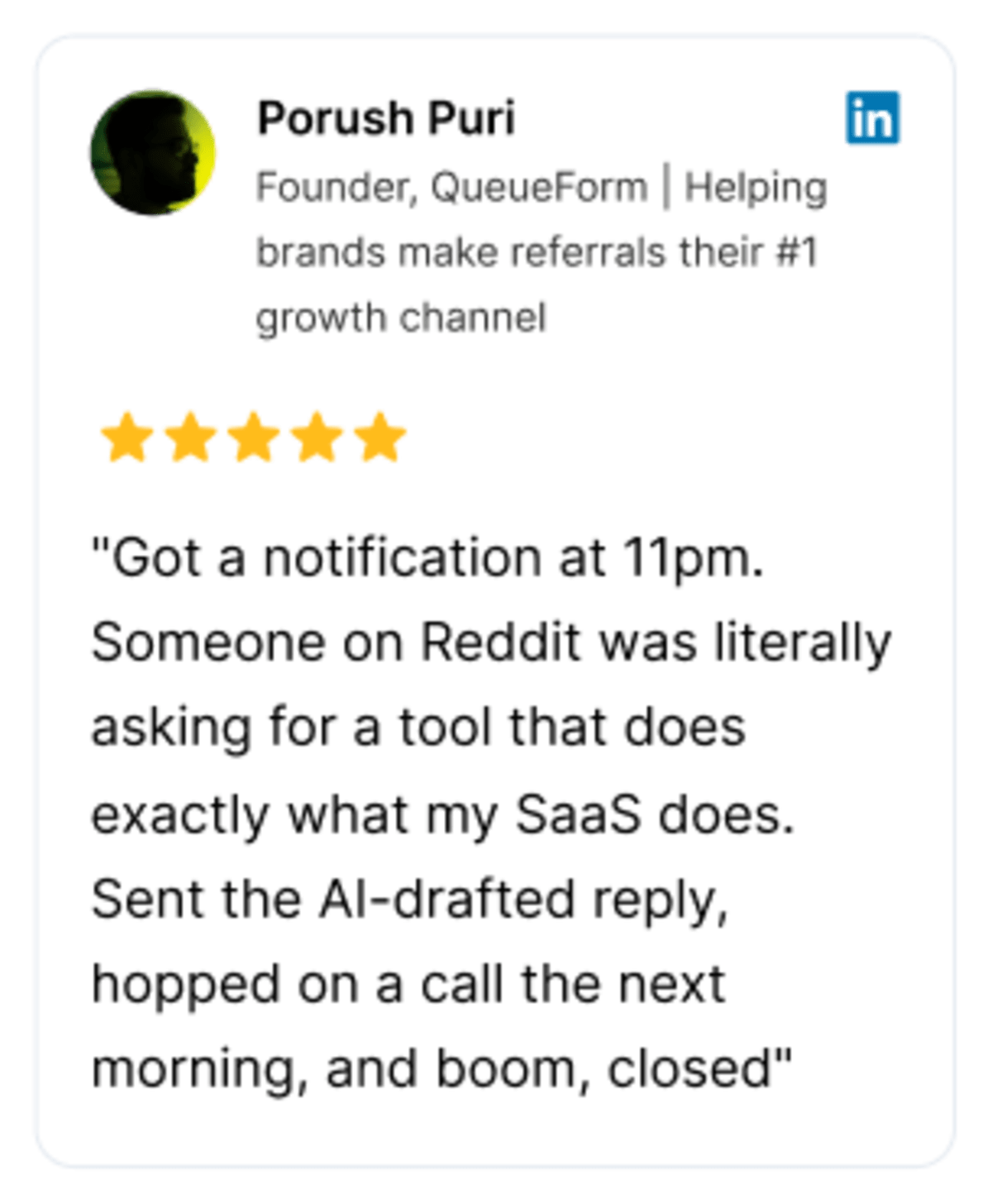
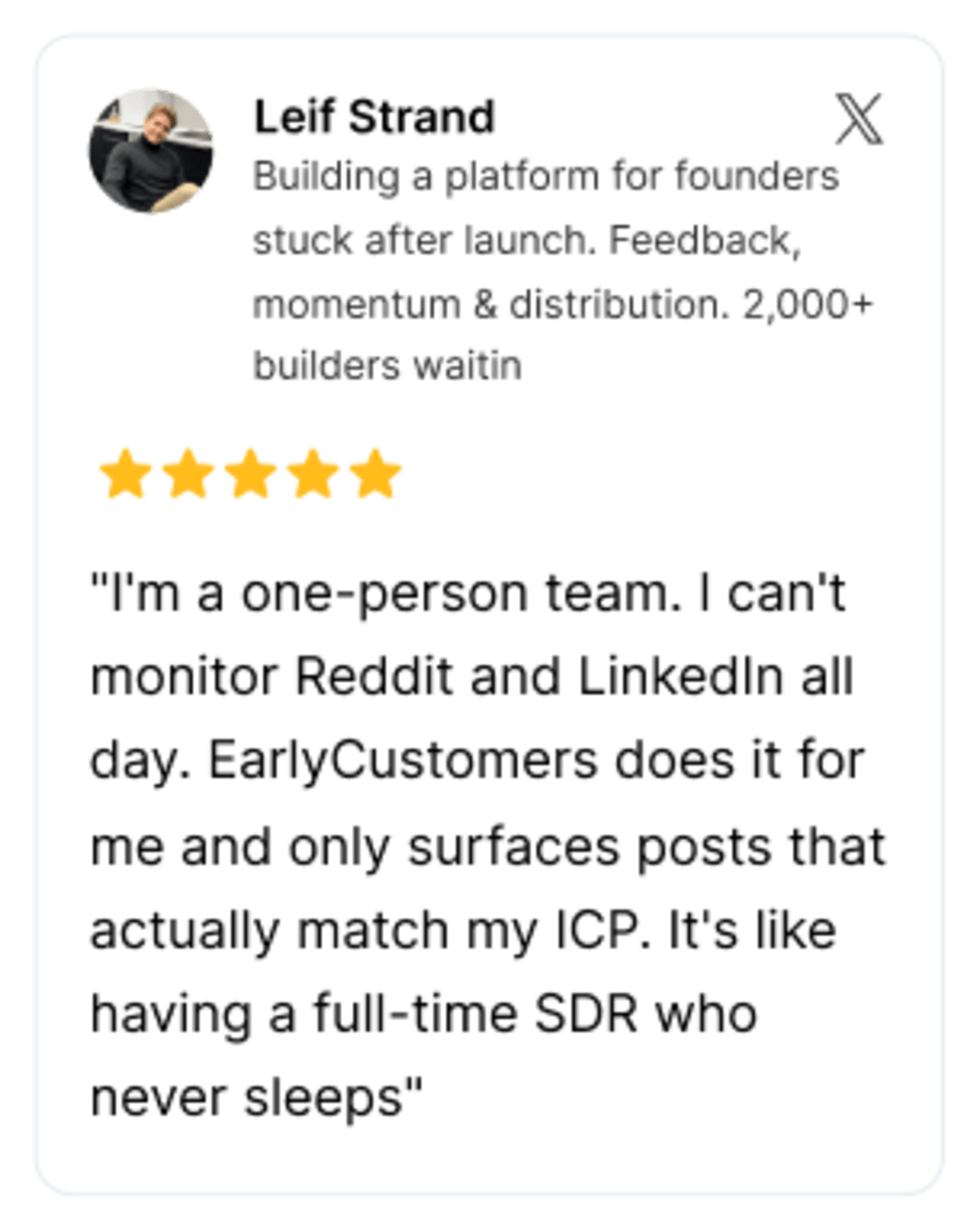
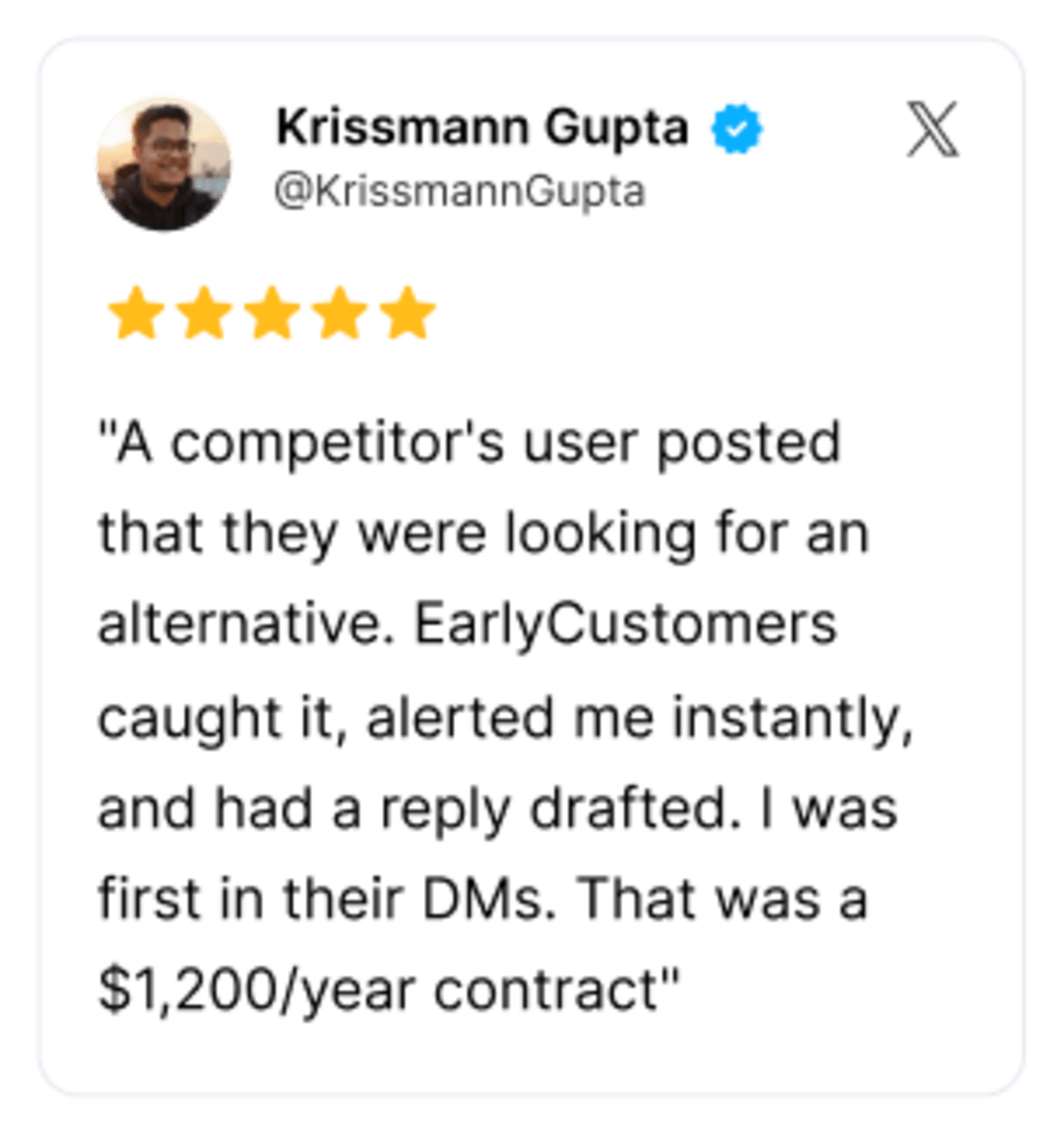
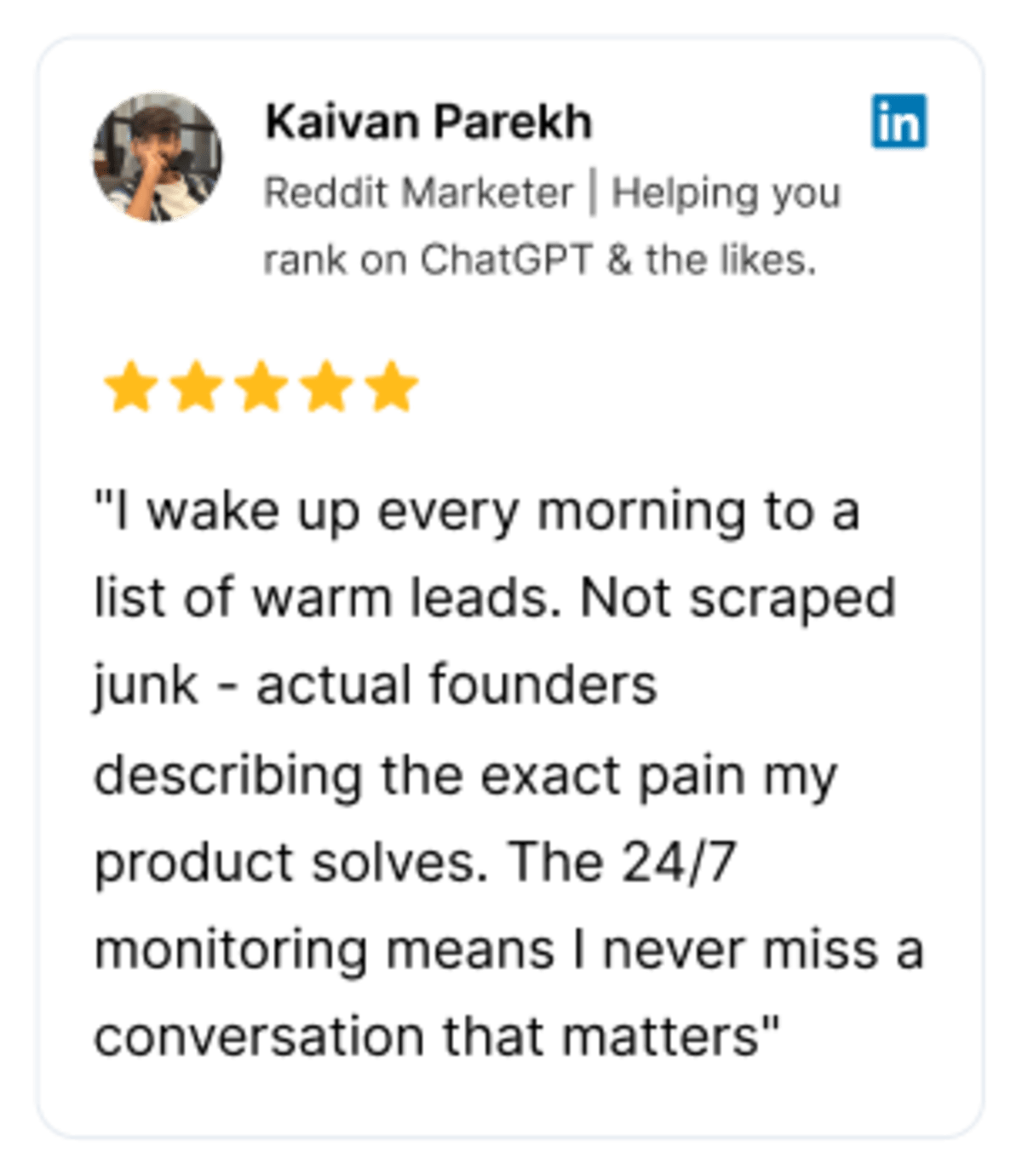
EarlyCustomers monitors Reddit, LinkedIn, and X 24/7 for people actively asking about your problem — so you never run out of warm leads for your cold outreach.
Start finding leads →